Visit msnbc.com for Breaking News, World News, and News about the Economy
Hat tip: Gideon Strauss
Related Posts:

a web resource . exploring missional horizons . navigating spiritual formation . journeying into vocational-incarnational living
Visit msnbc.com for Breaking News, World News, and News about the Economy
 Newsweek and Time give contrary versions of Calvinist influence in America
 One of the podcasts to which I subscribe through iTunes is Steve Brown, Etc.
Blue Parakeets & Homosexuals in the Church - Scot McKnight on SBEIf you're not careful, reading the Bible can make you weird.
Have you ever struggled with being a Bible-believing Christian without becoming an out-of-touch fundamentalist or wacky liberal? If so, don't miss Scot McKnight on this week's SBE. If not, listen anyway.
Scot McKnight is a biblical scholar, beliefnet blogger and author of The Blue Parakeet: Rethinking How You Read the Bible. Join Steve and Scot as they discuss blue parakeets and how to handle the biblical view of homosexuality without being an uptight jerk.
 Interestingly, it was Bryan Hollon that provided the best answer to the questions concerning atonement. He stated that there have been many “theories of atonement,” and that penal substitution is one of the valid biblical ways to describe the atonement. However, it is not the only way that the New Testament describes what happened with the cross and resurrection. He said that just as prominent in the Bible and in church history has been the Christus Victor view of atonement.
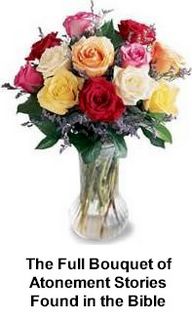
“for Dever to insist that [only] one of these stories of the Atonement is essential to Christianity is simply unbiblical. The Bible offers a full bouquet of Atonement stories, with differing colors, differing fragrances, differing textures, so that we can embrace the fullness of what Christ accomplished for us.
The Atonement is so big and spectacular that it takes all these stories to capture its beauty. People are so different in the various cultures in this world and in their assorted life-situations that these diverse stories speak to them wherever they are and whatever they believe and however they need the grace of God.
Dever pulls one rose from the bouquet and sets it alone as the single most significant story of the Atonement. It certainly is a beautiful rose, but we are missing so much more!”

 Brian McLaren started out the debate at Malone University by mapping out the progression of the emerging church conversation and his contribution to it.
 Malone University, in a bold move that should be applauded, brought Brian McLaren to campus. He spoke in Chapel on Monday morning and then debated Bryan Hollon, a theology professor at Malone on the topic, Emerging or Diverging: In What Direction is the Emerging Church Movement Headed?
  Inside Higher Ed has once again published the NCAA Men's tournament bracket, selecting winners based on the NCAA Academic Performance Rate.
 MSNBC is now conducting an on-line "Live Vote" on this question.
Should the motto "In God We Trust" be removed from U.S. currency?
_Yes. It's a violation of the principle of separation of church and state.
_No. The motto has historical and patriotic significance and does nothing to establish a state religion.
Is our society characterized by this kind of stewardship? This has become a rhetorical question. Christians no less than nonchristians have frequently acted as if economic means and technology are ends in themselves. We take a steady annual growth in material welfare for granted as if it were a right we are entitled to. We also convince ourselves that our own ever increasing wealth will enable us to preserve nature more carefully as well as provide some aid to the poor nations. But our thinking presupposes that our own material well-being, personally as well as nationally, must receive priority.
I am inclined to state that in this framework of thought things have been turned upside down. Mind you, the question is not whether economic growth in itself is good or bad. Our concern here is with the sequence of things. Stewardship means: first take care of the earth for which God has made you responsible, first see to it that others have enough, and then you will discover that there is plenty left for you and your own society. This is what I would call the economics of God's Kingdom. First seek that Kingdom and all things will come to you as a matter of course.
We believe markets to be the best way—no, the only sane way—to structure interactions in economic life. We don't only believe this because of the historical evidence from the complete failure and ghastly horror of socialism and fascism, but even more because we consider markets to be built into the very design of economic life. Markets as the proper setting for economic interaction, for buying and selling, are in our view a feature of the structure of reality. So we flagrantly support the idea and the reality of a market economy.
But this does not mean we support the idea of a market society. Human life is not all about economics. Contrary to rational choice theory, we human beings do not make all of our decisions simply in terms of cost/benefit analyses.
While economic life needs room to flourish, and needs protection from the encroachment of excessive government intrusion, it also needs limits. The sphere of economic life does not only provide businesses with a space for their wealth-generating manufacture of products and provision of services, and labor unions with a space for negotiating fair participation in these activities—it also sets the outer limits for business and labor.
There are many spheres of human life where economic considerations appropriately play a role but do not dictate decision-making. Families, schools and hospitals all have to balance their books—but they don't exist to balance their books. In each of their cases, love, learning, and care, respectively, trumps the bottom line.
One of the great challenges facing us is cultivating a society in which economic markets can flourish, but without overwhelming other spheres of human life.
If the question is whether or not free market capitalism is the biblically prescribed model for the economic life, then the answer is an emphatic “No.” There is no culturally transcendent economic model given in the bible. Therefore, no economic model is Christian. Those that would take capitalism (or any other economic system) down to the river and baptize it as THE Christian model engage in idolatry.
If the question is whether or not free market capitalism emerged from a society with a distinctively Christian ethos, then the answer would clearly be “Yes.” The ideas of human beings created in the image of God, linear time, progress, future orientation, and vision oriented ethics, were the soil from which capitalism grew. This is NOT to say that free market capitalism is the best of all economic systems that can, or ever will be, conceived. It is merely to acknowledge the roots from which it sprang.
The third way of interpreting this question is to evaluate the degree to which free market capitalism moves us in the direction of the coming age of shalom. It is this evaluation that has to be asked about every human construction, always with an eye to the fallen state of humanity and the inability to achieve utopia in our present age.
 Have you received this email or been recruited on Facebook to join this cause?
 A Christian Perspective on Work, Part 5