4/12/2011

Review: CULTURE MAKING by Andy Crouch

Culture Making: Recovering Our Creative Calling by Andy Crouch  InterVarsity Press, 2008, 288 pages


crouch-culture_makingAndy Crouch, in his landmark book, Culture Making: Recovering our Creative Calling, makes the case that the essence of humanity is that we are “creative cultivators.” This is rooted in his correct interpretation of the opening chapters of the Bible, where humans are created in the image of God, placed in the garden and given the task to “cultivate” (עָבַד) it (see Genesis 1:26-18 and 2:15)

But Crouch states that culture is not merely “a set of ideas” but rather “primarily a set of tangible goods” (p. 10). “Culture is what we make of the world” (p. 23). Therefore, “the only way to change the culture is to create more of it” (p. 67).

In a book about making culture, Crouch surprises the reader by actually providing a needed corrective to the human quest to change the culture (especially recent Christian articulations to “change the world”) by insisting that while we are indeed “culture makers,” “when we thoughtlessly grasp for the heedless rhetoric of ‘changing the world,’ we expose ourselves to temptation. We find ourselves in a situation similar to Adam and Eve’s in the Garden. ‘You will be like God, knowing good and evil…’ Is there a way to change the world without falling into one of the many traps laid for would-be world changers? If so, it will require us to learn the one thing the language of ‘changing the world’ usually lacks: humility” (p. 201).

“Culture Making,” according to Crouch, must not be about grand strategies to transform the world, for that is too large of a scale for finite and depraved humans to attempt. “The record of human efforts to change the world is mixed, to say the least…And the larger the scale of change we seek, the more mixed the record becomes” (p. 198). Therefore, Crouch advocates that we attempt to create cultural goods that offer positive contributions in smaller scales of time and place. The success of such culture making should be measured not by how influential they are in the larger cultural milieu, but in how they exhibit “integrity”: “We can speak of progress when a certain arena of culture is more whole, more faithful to the world of which it is making something” (p. 54).

Culture makers, therefore, should concentrate on smaller scales of influence, what Crouch calls the “3:12:120” – a close and dedicated small circle of three, a group of people (12) to make the cultural good come into existence, and a network of people (120) that will bring the cultural artifact into use. He states that every cultural innovation “is based on personal relationships and personal commitment. Culture making is hard. It simply doesn’t happen without deep investment of absolutely and relatively small groups of people. In culture making, size matters—in reverse… The almost uncanny thing about culture making is that a small group is enough” (p. 243, italics in original).

Crouch states that culture can be primarily understood as cultural goods or artifacts created by humans made in God’s image. If this is correct, then the question for culture makers is not the haughty one of “Can I change the world?” Rather, the question should be much more humble: “Does this thing that we have created meet the criteria of God’s intentions for his Creation and New Creation?” And, “Can I imagine this cultural artifact making it into the New Jerusalem?”

If God, in his sovereignty, decides to allow our cultural contribution to have an influence across the larger culture, then we thank him for that and pray for his will to be done with it.

3/27/2011

College Ministry in a Post-Christian Culture

Steve Lutz has unveiled the cover for his forthcoming book.


Steve writes,
Here’s what the cover is going for: a brochure-worthy image of a college scene, juxtaposed with the dark abstract tumbleweed in the middle.
I’m no art critic, but I use the metaphor of a tumbleweed in chapter one to illustrate the rootlessness, uncertainty, and spiritual dryness of the college years for many people.
While we’re at it, here’s an endorsement that will likely appear on the back cover, from noted author and missional thinker Alan Hirsch:
At last! A book that interprets the challenges of campus ministry through a distinctly missional lens. No longer can we simply view work among students simply as evangelism…we have to adopt a missionary stance in relation to this increasingly complex task. This is an intensely practical, and theologically substantial, orientation on what it means to do student ministry in 21st Century America. Way to go Steve.
Alan Hirsch
Author of The Forgotten Ways, Untamed, and Right Here, Right Now, among others.

3/19/2011

A Kairos Moment for the Church in Japan

This is a repost a blog post from Joe Handley, the president of ASIAN ACCESS -
12 March 2011 (06:25)
Japan Tsunami (AP)
Photo: AP
The last few days have proven to be memorable and horrific. It has been overwhelming to watch the images in Japan. We are called to act to bring the love of Christ to this hurting world. We trust that it will be a special moment for the work of God in Japan.
Yesterday Japan was jolted by the largest earthquake to ever hit this country, creating a tsunami of devastating impact. You've seen the reports of cities around Sendai that have been nearly completely destroyed. Other towns and villages along the sea coast have seen the same horrific condition. At last the last reporting, nearly 1300 people are either lost are killed in the aftermath of this destructive force.
Tsunami reports on Japanese TV
I am with our Asian Access/Japan staff on retreat near Nagano, where another quake (7+) hit early this morning. Everyone is okay, but the quakes certainly gave us pause and concern. We have been praying fervently and are convinced that this is a "kairos" moment for the Church in Japan. This is an historic opportunity for the Church to be the Church and rise up to serve the needs of the country in the name of Christ. We at Asian Access believe that God has called us similar to how Mordecai spoke to Esther centuries ago, "you have been called for such a time as this."
The Lord has uniquely positioned us with one of the largest and broadest networks of churches across the country. We believe the Lord would have us serve as a catalyst to "unite the church" to "extend the transforming power of the Gospel" as our mission statement directs. Interestingly enough, our new VP for Japan, had been planning a luncheon for this retreat to help us look at disaster preparations—on March 12, the day after the earthquake hit! In addition, several of our staff just went through a special course to assist the country in situations just like this one.
So, we are poised and ready to respond and now looks like the kairos moment for the church to rise up and make a difference, and in so doing, see transformation happen on multiple levels (spiritual, physical, social, etc.). We are networking with the church across the nation to mobilize the body of Christ for action and we invite you to join us in this 'kairos" opportunity. Pray for Japan, for the church and for us as we prepare to come alongside the church and other partners to deliver aid and respond with well-prepared teams as the opportunities arise.
In this effort, we have set up a special Japan Tsunami Relief Fund for you to invest (http://asianaccess.org/A2-Japan-Tsunami-Relief-Fund.html). This will provide aid to hard-hit areas, delivered primarily through local churches. There may be no greater opportunity for the Gospel’s advance in Japan than this very hour. In the coming weeks, we'll also inform you of service opportunities, but we need to plan these in cooperation with others to maximize our efforts.
C.R.A.S.H. planning session with Asian Access missionaries
Asian Access missionaries and Japanese pastors in a strategy session planning how we can respond practically. We will first deliver aid through our extensive network of churches, as well as participate personally in relief efforts in cooperation with C.R.A.S.H. (Christian Relief Assistance, Support, and Hope).
Please join us in praying and in giving to help the people of Japan in the midst of this enormous crisis.
Asian Access
P.O. Box 200
San Dimas, CA 91773 USA

3/01/2011

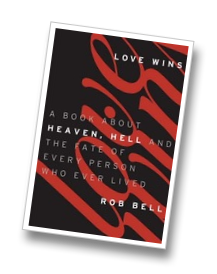
Rob Bell: Tapping into the Biggest Issue Facing Evangelicalism Today

There a lot of issues facing today’s evangelical church – We’ve seen heat over issues like homosexuality, political affiliation, non-hierarchical ecclesiology, postmodern epistemology, and more. But perhaps the biggest issue facing us in the coming years will be the deconstruction of our understanding of Hell. Instead of retreating into “This is a forbidden subject” as many of us do, we need to deal with it frankly and honestly, fixing our eyes squarely on the Scriptures and our hearts with the Spirit of God.

Rob Bell’s new book has caused a firestorm, especially after Justin Taylor wrote a scathing blog post about it in The Gospel Coalition’s website. Taylor wrote his critique based on this video to promote it:


Scot McKnight, a good friend and mentor of mine, wrote this to Sarah Pulliam Bailey at Christianity Today:
Justin may be right about what Rob believes, but if he is wrong then he owes Rob Bell a huge apology. I want to wait to see what Rob Bell says, read it for myself, and see what I think of it. Rob is tapping into what I think is the biggest issue facing evangelicalism today, and this fury shows that it just might be that big of an issue.
The publicity approach of HarperOne worked perfectly. They got huge publicity for a book. They intended to provoke -- and they did it well. I think it is wiser to wait to see the real thing than to rely on publicity's provocations. Justin bit, and so did many of his readers.
I look forward to engaging in a civil discussion about the nature of “Heaven, Hell and the fate of every person who ever lived” (as the subtitle of Bell’s book reads), because in my dealings with young college students this is the BIGGEST ISSUE that keeps them from even approaching a conversation about Jesus Christ.
_

2/23/2011

End the Veneer

Jason Locy and Tim Willard Challenge Us to Live Authentically as We Engage Culture


In their plenary talk and breakout session at this year’s Jubilee Conference, Jason Locy and Tim Willard spoke about a small lumber mill at which the owners take
hundred-year-old barn timber and restore it, revealing beautiful pieces of wood for use in new construction as flooring. The motto of the business is, “We don’t offer perfection but, rather, the beauty of imperfection.” The dings and bruises, when restored, provide character that beautifies the rooms in which they are laid.


This antique wood is different from the stuff you’ll find in the laminate flooring section of Home Depot. That wood is fake - it has a veneer. As Locy explained, “Veneer is a thin coating applied over a surface in order to hide an inferior material; it gives the finished good the appearance of something it is not. When applied to a less-expensive piece of wood (or composite), veneer tricks the eye into thinking the piece is of higher quality.”
A sad result of the Fall is that we all live under a veneer.  Instead of living fully as who we are made to be, we coat ourselves and hide behind this veneer, making it difficult to live as we should.


We are trained to live in a veneer through what Locy and Willard called the “Three Languages of Culture.” Celebrity teaches us to live vicariously through others’ more glamorous lives. Consumption teaches us to buy stuff in order to create a fake image of who we want other people to see us as. Technology (progress) continually creates new options to place space between our real selves and the people around us. A downside to Facebook, Twitter, and blogging is that quantity often wins over quality and our identities are too-often relegated to a screen of perceptions. A Facebook status can often be a simple and not-too-deep statement of who we are and what we want out of life, or a marketing veneer to boost our image in the eyes of others. Because of technology, consumerism, and celebrity, “we can be anybody and nobody at the same time.”


We must strip away the veneer to reveal something of true and lasting beauty.


The reason we put on a veneer is because there is something relational that is missing in our lives. The antidote of veneer, therefore, is love, relationships, and abiding in Christ.


We need to be with people, not hiding behind veneers of living vicariously through celebrity, of the faux images of ourselves that are accessed by what we consume, and of hiding behind technological facades.


Would we rather live under a veneer (a faked perfection, hiding the inferior product that lies underneath), or as real wood, with all its dings (all the hardships and failings and frustrations and scars of life) that make each of us unique?


“Our un-veneered lives should speak triumphantly, testifying that there is no need to hide true selves in order to gain acceptance.”

Jason Locy and Tim Willard’s book, Veneer: Living Deeply in a Surface Society is due out in April. Check out their website and blog at endveneer.com.

2/21/2011

The newest NIV – Overcoming a Sad and Shameful Chapter in Evangelical Harshness

The newest version of the NIV is coming out. Here is a brief sketch of the NIV’s history, courtesy of Scot McKnight:
The NIV came out in the 70s, it continually was revised, the TNIV came out in 2002, it was blasted uncharitably and became a translation whose reputation had been maligned and had a hard time making a go of it. It’s sad and it’s a shame what its critics said. For me it’s nothing more than a bitter chapter among evangelicals who had more fear than intellect at work. But that’s behind us. Zondervan and the Committee on Bible Translation have worked together to “update” the NIV into the NIV 2011.
Let’s hope the a more charitable (that is, a more grace-filled) response comes from the likes of James Dobson and his crowd of evangelical bullies!

2/17/2011

Gabe Lyons and the Needed Change in Our Church Structures

The Next Christians at amazon.comRJS, over at Jesus Creed (Scot McKnight’s website), asks some VERY important questions in light of what Gabe Lyons has written in his new book, The Next Christians: How a New Generation is Restoring the Faith.
Lyons writes,
“We educate, train, and hire “professional ministers,” placing a higher spiritual value on certain jobs and professions (like direct evangelism and service) and marking others (such as entertainment, academia, and science) as off-limits to orthodox Christians.
There are many practical benefits to this approach, but their are complications as well. For example, everyday Christians can develop and overdependence on formal ministry organizations. What’s more they are conditioned to view their own job as separate from ‘real ministry.’” (p. 109)
Reflecting on these words, RJS muses,
The church needs to empower and prepare Christians to go out into the world. The job of the pastor is not to lead in mission doing the “real work” of the church, but to nurture, disciple, and prepare Christians to go out into the world to do the real work of the church… The real work of the church is done not by the leadership vision attracting large numbers into the church, but by the people of the church sent out into every sphere of society.  Back to the questions above… assuming that Lyons is right and there is a shift and transformation taking place within the body of Christ …
How does it reshape the concept of church? How does it reshape the view of the success?
How does it impact the role of the pastor?
Go over to Jesus Creed and weigh in.

2/09/2011

Full-Time Vocational Ministry is Not The Pinnacle of Faithfulness

I remember attending Willow Creek’s Leadership Summit as a seminary student. As a young man excited about a future career as a pastor, I was deeply moved when Bill Hybels presented Matthew 16:18, when after Peter’s confession that Jesus is the Christ, the Lord proclaimed, “upon this rock I will build my church, and the gates of hell shall not prevail against it!” Over the huge projection screens, Hybels beamed as he looked out at the crowd gathered that day in South Barrington and confidently stated, “I believe that the center of God’s purpose is the Church.”

Oh, how I was inspired! I chose the right vocation, that of full-time pastoral ministry, because God’s Church is what it’s all about. As I sat in that massive auditorium (the epitome of successful church ministry), I thought about how important the institutional church is with our attractive worship services, classroom Bible studies, and varying programs to meet the needs of many different people.  I was grateful to be able to be someone who will be able to lead such an endeavor.

Obviously, the highest calling for someone, so I thought, was full-time vocational ministry (either as a pastor or as a missionary). Why? Because our churches and our ministries are the main things!

But as I’ve discovered over the years, the institutional church is not the main thing. The main thing is the Kingdom of God (see my previous post, where I state that the Church functions for the sake of the Kingdom of God, not the other way around).

What if we really believed that the main thing was something else besides the institutional church? What if it’s not about me (as the pastoral leader) or about our church (our building, our worship service, our programs), or about recruiting people to the high call of overseas missions (since this is seen as the pinnacle of “God’s work”). What if all these things are good things, but are meant to serve a greater thing, that is, the Kingdom of God?

What if God wants to rise up men and women who will yield their entire lives to the Lordship of Jesus and the purposes of His Kingdom? What if these men and women were to see all aspects of their lives as ways to contribute to bringing God’s Kingdom on earth as it is in Heaven? What if the pinnacle of doing Kingdom work is being faithful in the callings that ordinary humans are meant to have: Artists, engineers, nurses, educators, designers, homemakers, dads, moms, politicians, lawyers, carpenters, machinists, musicians, software writers, etc.?

I meet a lot of young people who want to be youth pastors or college campus ministers. Why? Because the people that have had the greatest impact on them were youth pastors and campus ministers, and they feel that they want to follow in these people’s footsteps. They have been taught (perhaps overtly but more likely covertly just by being in the presence of someone with these presumptions about ministry) that full-time vocational ministry is the most important, most God-honoring course to take in life.

Here’s a telling barometer for how we’re doing on this (that is, those of us in full-time vocational ministry): What if instead of finding the most satisfaction and joy when someone we have been mentoring and/or discipling says they want to become a missionary or go to seminary, we would find even more satisfaction and joy when we see them fully engaged in following Christ in the life they are called to live?

NEXT: A NEW PARADIGM FOR PASTORAL MINISTRY

2/07/2011

Favorite Super Bowl Ad?

I give a tie to Volkswagen and Best Buy.


This reminds me so much of my two boys running around pretending to be able to manipulate things around them with the Force. A great ad for a dad like me.


Ozzy Osbourne is replaced by Justin Bieber because technology moves so quickly. Well done. And Justin Bieber in a disguise saying “Kinda looks like a girl;” gotta love it.

Which ones did you like?


Dishonorable mention: Teleflora’s totally inappropriate commercial for a family event like the Super Bowl. What was Faith Hill thinking?

2/03/2011

Two Dualistic Extremes–From Our Culture and Our Churches

Searching for Happiness but our Dualism Gets in the Way


naugle-reorderedDavid Naugle, in his book Reordered Love, Reordered Lives: Learning the Deep Meaning of Happiness, writes,
“The genius of the Christian faith…is that it does not call upon us to eliminate our love for things on earth out of our love for God in Heaven. (p.21)
The happy life…consists of learning how to love both God supremely and the world in the right way at the very same time. In fact, the world and its resources exist to point us to God and his glory, that we might recognize God in, and love him for, his gifts.” (p. 22)
But this is contrary to what we are taught, both in our culture and in our churches.


In today’s culture, we are taught to love that which gives us pleasure – that happiness is in the party, the relationship, the things we can buy and consume, the entertainment we watch, and the hobbies we spend our spare time doing. As Indie Rock band Hard Fi sing,
Working all the time
Work is such a bind
Got some money to spend
Living for the weekend
When it gets too much
I live for the rush
Got some money to spend
Living for the weekend


The only thing that matters is what we do in the body. There is no spiritual dimension to life, so let’s make money and live for the weekend.


In response to this hedonistic attitude, church leaders have taught us that all that really matters is the soul, the mind, and being spiritual so that we can win the war against the body and this physical world. As the old church song goes,
This world is not my home, I'm just a passing thru,
My treasures are laid up somewhere beyond the blue;
The angels beckon me from Heaven's open door,
And I can't feel at home in this world anymore.


But both views show a dualistic attitude that actually dilutes our ability to experience true happiness. I’ll let David Naugle explain:
“The worldly mistake is to focus on the physical creation, forfeiting the soul for the body, sacrificing the transcendent for the immanent, and eliminating the sacred from the secular. The mistake the church sometimes makes is to focus on the heavenly Creator forfeiting the body for the soul, sacrificing the immanent for the transcendent, and eliminating the secular from the sacred. At the root of both errors is a common but malicious dualism that separates or eliminates one indispensible realm of reality from the other. As a result of the split, the favored portion receives excessive, if not distorted, attention, and the unfavored portion suffers inappropriate, if not slanderous, neglect.” (p. 23)
What can we do to finally rid ourselves of the dualisms that defeat the purposes of God in our lives and our true happiness?
-

2/02/2011

Five Year Anniversary of Almost Dying

Five years ago, I nearly died of a dissection of my ascending aorta. 2006 was a traumatic year for our family and friends. But I am grateful for all of them, and to my God who is good, all the time.

Read about what happened here.

2/01/2011

What's one thing that you wish youth pastors knew/did/prepared their students for?


youthThat’s the question my good friend Joel Daniel Harris asked college ministers at a Youth Pastors gathering today. As a member of the panel he invited to answer that question, I had a lot to say about this subject.

Here’s what I see very often in students that come out of church youth group ministries:
(Thankfully, many youth groups in today’s local churches are increasingly breaking this perception, but more often than not, I still experience as a college pastor that I have to do a lot of deprogramming of students from this mindset.)

These young men and women grew up in the church and have been taught their entire lives that the center of Christian life is the local church. This is what they have been taught: God’s purpose for them as Christians is to be witnesses for Christ in the world, to share the love and grace of Jesus to those around them in order to create opportunities to those in the world to accept Jesus as their savior from the world, assuring them of their place in heaven one day. This world is evil, full of temptation and sinful behavior. This world is passing away; what is eternal is the great and wonderful promise of heaven in the future. In the meantime, God calls each person who receives salvation from this world into the local church, where they will hear the preaching of the Word of God and His message of salvation, where they will gather to worship God, and where they will serve the purposes of Christ’s church – to be the beacon of light in a dark and evil world.

Then there comes this rub: When someone hits 17 years of age, a Junior or Senior in High School, they start to get a competing message from their parents. It sounds like this: We must find a good college for you to attend. You must prepare for a career that will be both fulfilling and will provide a good income for you and your future family. If you want all that the American Dream offers, you must get into the right school and pursue the right career. And, oh, by the way: the more money you make the more you will be able to give to the church and to missionaries. That’s the good news of pursuing your degree! Don’t forget God in this!

But also, there is bad news: Those professors at college are out to steal your faith away. When you are away at college, you must protect yourself from the world – you must get involved in a campus ministry and/or a local church. Don’t let that nasty University teach you the ways of the world. Remember to have your quiet time each day. And ask for opportunities to witness to those on you dorm floor.  After you read your Bible in your dorm room, be sure to leave it open on your desk as a testimony for your roommates. Perhaps you will be able to invite some of them into your campus ministry or your church, and save them, as well, from the fallenness of the University.

So I meet students that see their Christian mission while at college to create a Youth-Group-type-of-ministry on campus, something cool that will provide opportunities for them to worship and learn the Bible. Something that will serve as both a shelter from the evil university in which they find themselves, and a place to invite those who are living in the evil world of the university so that they can be saved from this institution of the evil world.

And then I show up in their lives, and we start to talk. I ask them to contemplate a new paradigm. What if the goal of Christianity is not simply to escape the evil of this world (especially that which they teach us here at this university) and to get to heaven when we die? What if the purpose of the church and of Christian fellowship is more than just being a shelter from the evil world, or a place to worship and Bible study, or the mediating place where people can come and meet God so that they too can go to heaven one day?


What if we shake up this notion that the world is a dark and evil place and the church and heaven is the bright and glorious place? What if God loves his creation, so much so that he cares about all that we do, including our studies in college and our careers after we graduate? What if God is more interested in the redemption of all things on earth rather than our escape from all things on earth?


What if the purpose of Christian fellowship and church is to be the united body of Christ, doing what he has always been doing: making all things new? What if he wants us to love Him so much that we intentionally place all things under his Lordship, including our major at college? What if God wants us to glorify him in our career, to see our work as full-time Christian ministry? What if we rid ourselves of the notion that the only Christian ministry happens in the confines of what we have experienced as “church?”


What if God is calling us to see ourselves as participating with Him in bringing redemption to the very sphere of influence in our career that he will be placing us, bringing God’s Kingdom to bear on that?

1/31/2011

The Top Twenty Progressive Rock Albums of the Decade

As most of my readers know, my quirky taste in music runs along the lines of progressive rock, a genre made popular in the 1970s as part of a "mostly British attempt to elevate rock music to new levels of artistic credibility” (allmusic).

What I love about Prog Rock is both the musicianship (artists are constantly pushing rock's technical and compositional boundaries) and how the genre joins together the standard song structure of rock/popular music (verse-chorus-verse) with the influence of classical music’s complexity of composition (resulting in longer songs, thematic albums with concepts or storylines, and explorations of melodies that the standard structure limits).

With the rise of Punk and Disco in the late ‘70s, Prog lost its selling power (though established bands like Yes, Genesis, Rush, and Pink Floyd were able to continue). In the ‘80s, there was a revival of the genre with bands like Asia, Marillion, UK, IQ, and Pendragon (with music that is technically called “Neo-Prog”). But MTV had hit it big, and Pop was all the rage (along with Hair Bands!) and as The Buggles sang, “Video Killed the Radio Star.”

In the ‘90s, a real revival of Prog occurred, one that even Grunge could not choke out. This “Third Wave,” was spearheaded by Sweden's The Flower Kings, the UK's Porcupine Tree, the Netherland’s Arjen Anthony Lucassen with his project “Ayreon,” and from the United States, Dream Theater, Spock's Beard, Echolyn, and Proto-Kaw,(a reincarnation of an early lineup of Kansas).

orphancover300x300
So what were the best albums of the past decade starting in 2000? Here’s my take. Check these albums out; you’ll be glad you did.

20. Spooning Out the Sea, by Orphan Project, 2009
Orphan Project offers a crisp sounding American prog sound (in the vein of Kansas and Spock’s Beard) with deep lyrics of hope and reliance upon the grace of God.
Lyricist and singer Shane Lankford has a lot to say: on OP’s first album he shared how his being an adopted orphan also led to his discovery and embrace of being adopted into God’s family. On this, OP’s second album, he further explores spiritual issues with great, engaging progressive music.


riverside-secondlifesyndrome19. Second Life Syndrome, by Riverside, 2005
Riverside is a Polish band that has found fame in that part of the world (they really are “Big in Europe!”). Those of us who love progressive rock that is on the more metal side, but with complex changes in mood and a lot of variety with mellow, Pink Floyd-like sections along with harder Porcupine Tree-like sections, will really enjoy this album. Riverside has toured with both Marillion and Dream Theater, which gives you an indication to both of the quality of their musicianship and the unique style of their music.


MUSE - Theresistance-300x29518. The Resistance, by Muse, 2009
Muse is not strictly a Prog Rock band, but they certainly have a progressive approach to their music, constantly experimenting to create unique atmospheres with piano and strings, yet never afraid to go bombastic with aggressive guitars and huge anthem choruses. They make pompous and grandiose music cool again (the first time we can say that since the heyday of Emerson, Lake and Palmer!).
deeexpus-half_way_home

17. Half Way Home, by DeeExpus, 2008
Inspired by the music of Porcupine Tree (as evidenced by the song “PTTee",” one of the finest songs you’ll ever hear), songwriter, producer, and multi-instrumentalist Andy Ditchfield got together with vocalist Tony Wright to create this amazing album. After the album was created by the incredibly talented Ditchfield, they recruited a band to play on tour. In the words of the band's own publicity "their sound is as eclectic as their influences, drawn from years of listening to such groups and artists as Joe Jackson, Iron Maiden, It Bites, Crash Test Dummies, Rush, Nik Kershaw, Marillion and recently - Porcupine Tree and Spock's Beard". DeeExpus is good. Really good. And that’s not just my opinion, they won Classic Rock Society's “Best New Band” Award.


dream theater octavarium16. Octavarium, by Dream Theater, 2005
Dream Theater has long been established as the kings of Progressive Metal. I remember the first time my friend Matt took me to a DT concert – I was just amazed at what I was watching. These guys are the most technically amazing musicians I’ve ever seen. It’s downright frightening to think how good each one of them are on their instruments. Dream Theater is a mix of Metal (think Metallica, Queensryche, and Rush) with Progressive (think Pink Floyd, Genesis, Yes). Much of DT’s music features extremely complex and fast metal, with sophisticated time signature changes thoughout, which makes for difficult listening to the uninitiated. But with Octavarium, the band focused more on actual songwriting, creating a much more accessible album, with songs that sound like Muse (“Never Enough”) or even U2 (“I Walk Beside You”). But for the diehard Proggers, there is the magnificent 24 minute, eight-parter, “Octavarium”.

Porcupine Tree Deadwing CD15. Deadwing, by Porcupine Tree, 2005 Steven Wilson started Porcupine Tree in the ‘90s with spacey experimental psychedelia reminiscent of Pink Floyd and Tangerine Dream. But Wilson’s music has evolved into making Porcupine Tree the band on the leading edge of modern Progressive Rock, defying genres by blending together numerous ambient, metal and avant-garde styles. Wilson creates and produces soundscapes that are the best in the business. Deadwing is the band’s eighth studio album. The material here varies from shorter airplay-friendly songs like “Shallow” to the 10-minute proggy masterpiece “Arriving Somewhere But Not Here.”

touchstone-wintercoast14. Wintercoast, by Touchstone, 2009 This album won the top honor in my best albums that I discovered last year. Touchstone’s music is an awesome juxtaposition of symphonic progressive melodies and soundscapes featuring the angelic, sweet vocals of Kim Seviour with the aggression of guitars and drums that edge toward metal and the masculine vocals of keyboardist and composer Rob Cottingham. This creates a musical journey with twists and turns – sweet melodies followed by heavy rocking, all in the same song. What a fantastic album, for fans of Lacuna Coil and Within Temptation, but also for those who love Genesis, Yes, and Spock’s Beard.

coldplay VivaLaVida
13. Viva La Vida, Or Death and All His Friends, by Coldplay, 2008
Okay, I know that Coldplay are not a Progressive Rock band. But they represent the same kind of mentality toward their music that a good Prog band has: lush atmosphere, a theme that unites the album into a cohesive whole, and experimental explorations of melodies beyond the standard music structure of pop music. How the album opens with an instrumental (“Life in Technicolor”) that blends into an atmospheric piece (“Cemeteries of London”) tells you this is no ordinary pop album. “42,” “Lovers in Japan/Reign of Love,” and “Death and All His Friends” are examples of Proggy song composition – a willingness to switch gears midsong to create a more powerful experience. There are a number of great-selling bands that edge toward prog: the aforementioned Muse and Radiohead are examples, along with Metallica and Mastodon in the Metal genre.

TransAtlanticBridgeAcrossForever12. Bridge Across Forever, by Transatlantic, 2001
When Americans Neal Morse (keyboards, vocals) of Spock’s Beard and Mike Portnoy (drums) of Dream Theater dreamed of starting a supergroup, they imagined working with some Prog Rock masters from overseas. They recruited Roine Stolt (guitars, vocals) whose band The Flower Kings moved the Yes sound into the 21st Century, and Pete Trewavas (bass) from Marillion, a leader in the new wave of bands in the Genesis sound lineage. Their debut album, SMPTe (2000) was critically applauded. But the second album really shines, as the band became more cohesive and the “epic” songs lived up to the term. Both “Duel with the Devil” and “Stranger in Your Soul” clock in at over 26 minutes, the latter is a masterpiece from the mind and heart of Neal Morse.

devin townsend project addicted11. Addicted, by Devin Townsend Project, 2009
Townsend is the founder of “Extreme Metal / Thrash Metal / Death Metal” band, Strapping Young Lad. I am not a fan of this genre of music, and have little interest in SYL. I find it all so loud and obnoxious. But with his new “The Devin Townsend Project,” he is turning over a new leaf. “I wanted to make a record that was heavy, without being dark or depressing. When I got into metal it was for the energy behind it, but somewhere along the way that energy started getting really negative.” With Addicted, Townsend offers an excellent hard prog rock album, with melody and precision. But the spotlight on this album is the vocals of Anneke van Giesbergen (ex-The Gathering, Ayreon). Her beautiful and haunting voice compliments Townsend’s exceptional vocals perfectly. This album must be heard on top-of-the-line headphones or a high-end home sound system to get the fullness of the production value. Townsend’s ability to add layers upon layers of sounds without muddying the sound is an amazing feat.

OSI Free10. Free, by OSI, 2006
OSI’s first album, “Office of Strategic Influence” (2003) and their third album, “Blood” (2009) both could have made this list. For some reason, I’ve chosen their second album to represent this impressive body of work. Fans of Dream Theater were put off by OSI’s first album, expecting a DT-like experience, since Kevin Moore was previously the keyboardist with Dream Theater, and the drummer was Mike Portnoy (Dream Theater’s drummer). But this music is very different, being a whole new hybrid of post-metal and electronica. The band is actually led by Moore and Jim Matheos (Fate’s Warning), and they have come up with a new and experimental sound that is unlike anything else out there. To compare OSI with Dream Theater is like comparing apples to oranges.

TRANSATLANTIC-The whirlwind.9. The Whirlwind, by Transatlantic, 2009
After a prolonged time since their last getting together when they made “Bridge Across Forever” in 2001 (see #12 above), Neal Morse, Mike Portnoy, Pete Trewavas, and Roine Stolt gave us the incredible gift of “The Whirlwind.” This is an epic story both musically and lyrically, a magnum opus with eschatological undertones but with hope in the midst of suffering. Transatlantic has placed themselves in the upper echelon of the great rock supergroups of all time. How good are they? Good enough for me to drive eight hours to Philadelphia to see them live in concert back in April. What a show! After they played this entire album through, they took a break for intermission and then played songs from their first two albums. Before leaving the stage for intermission, a sweaty Mike Portnoy stood next to his drumkit and said, “Well, that was our first song. How’s that for an epic? A 75-minute opening song!”

peter gabriel - up8. Up, by Peter Gabriel, 2002
What can I say? Peter Gabriel is the man! “Up” was his last full album (he contributed several tracks to “Big Blue Ball” (2008) and his latest album, “Scratch My Back” (2010) is a covers album). At over 50 years of age, he shows the rest of his former bandmates in Genesis how it’s still done. He is always “progressive” in that every track is inventive and pushes the boundaries (yet with the incredible knack of keeping us with him with an accessibility that is uncanny). How I wish he would have joined the rest of Genesis for the reunion tour in 2007!

Porcupine_Tree_The_incident7. The Incident, by Porcupine Tree, 2009
After the disappointing “Fear of a Blank Planet” (2007), I was wondering if I was “Porcupine Treed Out” after having consumed so much of Steven Wilson’s music over the past decade. Therefore, when “The Incident” came out, I had lower expectations than for that previous album, and the first couple listens had me confused as to what Wilson was up to here. Some songs were only a minute and a half long! As soon as I was getting into it, the song would switch to the next track. Then I figured it out: The entire CD is meant to be a single composition, with musical themes repeating here and there throughout the album. Some tracks were indeed set-ups for the next track, and several tracks were meant to be considered together as a single entity. Oh! I get it! And, with that, I was amazed. “The Incident” is evidence of Steven Wilson’s musical genius. And it is also evidence that the iTunes era of downloading single tracks is sad, because this album is meant to be heard in its entirety.

Neal_Morse_V_Testimony_R_Front6. Testimony, by Neal Morse, 2003
The first album for Morse after leaving the band he founded, Spock’s Beard, for a more clearly Christian slant, this is a very personal and amazing album, telling the story of his struggle to seek fame and fortune as a musician and getting caught up in the party lifestyle of California rock music. All the while, Jesus was reaching out to him (“Sleeping Jesus”) while he was still feeling the influence of “The Prince of the Power of the Air.” He met his future wife, a devout Christian, and he was moved by the love of Christ found in the small country church near Nashville that she attended. This is an epic, 2-CD testimony of Neal Morse’s conversion, with elements of Kansas, Yes, Genesis, Gentle Giant, Dream Theater, The Beatles, and classical music. This CD has a special place in my heart, I listened to it a lot while recovering from the aortic dissection that nearly took my life in 2006., it was the soundtrack to my worship of God in sparing my life. I told Neal this at an after-concert meet and greet, and he was visibly moved by my testimony about his “Testimony.”

frost15. Milliontown, by Frost*, 2006
Frost* debuted with one of the most impressive CDs of the decade. In 2004, Jem Godfrey, a multi-talented musician who has made a name for himself in the UK as producer of many top radio hits, decided to try his hand at Progressive Rock. Milliontown is an extremely listenable symphonic progressive rock album. Melodies are the centerpiece, with progressive rock changes in time signatures. For fans of classic Genesis, a must have. There are also shades of latter-day Peter Gabriel.

neal_morse_ONE4. One, by Neal Morse, 2004
This is the quintessential Neal Morse album. “One” tells the sweeping tale of the original union of humanity with God, followed by disastrous separation, but then culminated in a glorious reunion  This album features not only the tremendous artistic diversity of Neal Morse (vocals, keys, guitar), but also the superior drumming of Mike Portnoy (formerly of Dream Theater) and the legendary guitar skills of Phil Keaggy (who also sings a duet with Morse on one song). Think of the best of prog legends Pink Floyd, old-school Genesis, Kansas, and Yes, and add in the best of Rich Mullins or Michael W. Smith from the Christian sector, then add the kind of rock-opera feel that Trans-Siberian Orchestra has accomplished with their Christmas albums… and on top of all that, add the pop-music sensibilities and sophistication of The Beatles at their creative height and you are just scratching the surface of what you’ll be hearing. Read my full review here.

Porcupine Tree In Absentia CD3. In Absentia, by Porcupine Tree, 2002
With three albums in the top 20, the band of the decade was Porcupine Tree. They have single-handedly redefined the genre with a mix of ambient atmospheres, catchy melodies and hooks, complex time signatures, aggressive guitar and percussion, and story-telling lyrics. “In Absentia” is PT’s most approachable CD. The opening songs (“Blackest Eyes” and “Trains”) epitomize the PT sound with hints of Radiohead, while “Gravity Eyelids” harkens back to their days when they were called the new Pink Floyd.

Ayreon_-_Human_Equation2. The Human Equation, by Ayreon, 2004
Along with his side projects Star One, Guilt Machine, Ambeon, and Stream of Passion, Arjen Anthony Lucassen’s primary musical project has been Ayreon, a series of CDs dating back to 1995 with The Final Experiment and ending with 2008’s 01011001. All the albums in the Ayreon catalog have been incredible and worthy of their own place on “Top Albums” lists, but The Human Equation is simply one of the finest albums ever produced. It tells the story of a man in a coma after a car crash, interacting with his emotions after the betrayal he experienced when he caught his best friend kissing his wife. What makes this particular album unique is that each of his emotions is anthropomorphized and given a specific vocalist – eleven vocalists are employed, singing the parts of “Reason,” “Love,” “Pride,” “Agony,” etc. The 2-CD concept album never gets old or tedious because of the eclectic styles that Lucassen is capable of creating. At times, the music reminds you of something from Pink Floyd, then it sounds like Genesis, and then it sounds like a wonderful mix of Yes with Dream Theater. The artists that Lucassen recruited to sing and perform on this album are all amazing, and the his production genius is amazing.

SBSnow1. Snow, by Spock’s Beard, 2002
Neal Morse’s final album at the helm of the band he founded is a rock opera masterpiece. It’s too bad that he left the band after it’s release; I would loved to have seen this album performed live. Morse went on to a fantastic solo career, while the band went forward with uneven results (understandable, since Neal Morse was the creative force behind the band for its first six albums). Morse is also one of the masterminds behind the Prog supergroup Transatlantic. “Snow” is the story of a young man whose called this nickname due to his pale complexion. Snow leaves his small town for New York, where he discovers his supernatural powers to feel the pain of the people he encounters and the ability to heal them. This is a very moving album – the Christian allegory is real but it is subtle. The music moves effortlessly from the influence of Genesis to Yes to The Beatles to Gentle Giant to Kansas. There are wonderful ballads and hard-edged rockers. There are excursions into magnificent instrumentals that showcase the band's excellence as players (especially Morse, who provides vocals and plays piano and acoustic guitar). This 2-CD concept album moved Morse into the upper-echelon of composers; with this album he developed the ability to create a complex yet cohesive album with repeated themes to tie things together and catchy melodies and hooks for individual songs that are worthy of radio airplay.

genesis-remastered
Special Honorable Mention:
The new 5.1 Surround Sound and Stereo Masters of the Genesis Catalog (2007). I have long been a fan of this band, especially of their music from when Peter Gabriel was the lead singer (1969-1975) up through 1982 when Phil Collins was lead singer but they remained a leading progressive rock innovator. Tony Banks, Mike Rutherford, and Steve Hackett are far too often overlooked in favor of the bigger-than-life frontmen, but they are the heart and soul of this music. These CDs are not just re-mixes, but entire re-masters. To hear old albums like “Nursery Cryme” (1971) brought to new life is just amazing. Wow. Just wow.
-