According to the New Testament, Christ set us free from bondage through another "exodus." The God of the Old Testament, who freed the Israelites from bondage to Pharoah is the same God of the New Testament, who again frees his people from bondage.
At the Transfiguration Event, we read, "And behold, two men were talking with Him; and they were Moses and Elijah, who, appearing in glory, were speaking of His departure (the Greek word is exodus) which He was about to accomplish at Jerusalem.” (Luke 9:30-31)
Vanhoozer comments,
“The mention of ‘exodus’ in connection with Jesus’ death in the account of his transfiguration is hardly coincidental; it rather stands for the entire passion narrative section introduced by that episode. This new exodus, like the earlier one, is God’s mighty act.” (The Drama of Doctrine [WJK, 2005], p. 41).
It is also not coincidental that Jesus’ “Passion” (his suffering, death and resurrection) occurs during Passover Week. The Passover was the celebration of Yahweh’s liberation of the Israelites from the captivity of Egypt. The Last Supper is a Passover meal:
“During the Passover meal someone, usually the youngest son, was designated to ask the question “Why is this night different from other nights?” At this point the host would retell the story of Israel’s deliverance out of Egypt and the meaning of the various elements of the meal. As the host of the Last Supper, Jesus would have been the one who retold the story. Later, the parallels between the Passover and the Last Supper which Jesus was establishing would be quite apparent.” (R.H. Stein, “Last Supper” in Green, McKnight, Marshall, Dictionary of Jesus and the Gospels,[InterVarsity Press, 1992], p. 447)
Again (to harken back to my previous post), it is not coincidental that Paul uses the exodus paradigm of liberation to articulate the Gospel.
- “…giving thanks to the Father, who has qualified us to share in the inheritance of the saints in Light. For He rescued us from the domain of darkness, and transferred us to the kingdom of His beloved Son, in whom we have redemption, the forgiveness of sins. ” (Col 1:12-14)
Walsh and Keesmaat comment,
“This language of inheritance, forgiveness and rescue from one empire in order to be freed in another kingdom harks back to the exodus narrative. It was Israel who was rescued from the imperial captivity of Egypt. It was Israel who received the promised land as an inheritance. And it was to rebellious Israel that God revealed himself as a God of forgiveness (see Ex 32:7-34:10). Now, says Paul, we experience an exodus liberation in Jesus…In postmodern terms, this liberation is not in order to enslave us in yet another regime that would violently impose it ideology on us…the kingdom of the beloved Son is a kingdom won not through violence imposed on others but through violence imposed upon the Son.” (Walsh and Keesmaat, Colossians Remixed: Subverting the Empire Colossians Remixed: Subverting the Empire, p. 110)
How does Jesus free us from bondage? The word is “ransom.”
- “For even the Son of Man did not come to be served, but to serve, and to give his life as a ransom for many.” (Mark 10:45)
- “Jesus Christ, who gave himself for us to redeem us from all wickedness and to purify for himself a people that are his very own, eager to do what is good.” (Titus 2:13-14)
- “You were bought at a price.” (1 Cor 6:20; 7:23)
God’s plan of Redemption is for all Creation, and it is accomplished through the “ransom” of captive humanity from bondage. Leon Morris writes,
“Paul assumes the creation story which sees people as originally in right relationship with God. But the coming of sin made them slaves to sin (Rom 6:6) and liable to the sentence of death (Rom 6:23). One way of viewing what was done at the cross of Christ was to see it as the paying of a price (1 Cor 6:20; 7:23), specifically a ransom (1 Tim 2:6) that frees people from slavery or the death sentence. Releasing people from bondage with the payment of a price is just the sort of thing that the ancient world saw as redemption.” (Morris, “Redemption” in Dictionary of Paul and His Letters, p. 785)
___
Next: Tying it all together: How Redemption is about restoring Shalom between God and His Creation through the Reconciliation of Atonement.
Links to the entire series:
1: Define the Predicament, and You Understand another Facet of the Gospel
2: Predicament #1: The Lack of Shalom
3: Evil Bondage in the Place of Shalom
4: EXODUS and the GOOD NEWS of FREEDOM in Paul
5: EXODUS and the GOOD NEWS of FREEDOM in the GOSPELS
6: Another of Humanity’s Predicaments: Broken Relationships
7: The Prophesied Kingdom of God
8: The Kingdom of God Restoring Israel from Exile
9: The Kingdom of God Healing Broken Relationships
10: The Kingdom of God and the Atonement
11: The Kingdom and the Mission of God’s People
12: What is my view of the Kingdom of God?
technorati: emerging church, spiritual formation
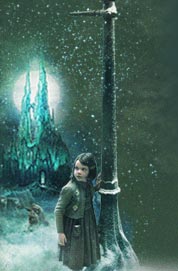 C.S. Lewis understood this. In his classic children’s story, The Lion, the Witch, and the Wardrobe, the main plotline is that Narnia is held bondage to the evil one (in Lewis' story, it is the White Witch), and so in Narnia it is “always winter but never Christmas.” The rightful Ruler of Narnia, Aslan (the Christ figure), has been usurped by the evil one. So, the story is how Aslan ordains that four human beings (Peter, Susan, Edmund, and Lucy) will be his instruments to overthrow the evil one’s grip on Narnia. A subplot finds that when Edmund betrays the others, Aslan sacrifices his life to redeem him (as his substitute). When Edmund is restored, he co-leads the battle against the evil army led by the evil witch. When the victory is won, the four humans are placed upon thrones to rule over Narnia. Lewis tells the story of the cosmic battle of Kingdoms -- Who will rule Narnia? The evil White Witch or Aslan and his vice-regents, the four humans? It is the story of the Gospel of the Kingdom of God that Jesus, the Messiah of the world, proclaimed.
 The Hebrew word for this is “Shalom.” Nicholas Wolterstorff says that a society characterized by shalom combines peace, justice, and enjoyment of all relationships so that all peoples can flourish in their lives, and that they can also delight in their relationship with God
 I have to brag a little.
 This month’s cover of Christianity Today reads, “No Substitute for the Substitute.” The article ("
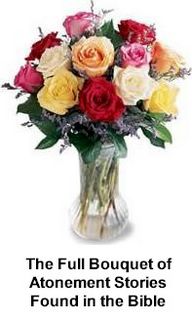 Each of these varying stories (and more, including the Reformational view of Penal Substitution) of the Atonement is found in the Bible, and each leads to faith in Jesus Christ. Each is a beautiful rose in the bouquet that encompasses the multi-faceted aspects of what Christ accomplished on the cross.
 colors, differing fragrances, differing textures, so that we can embrace the fullness of what Christ accomplished for us. The Atonement is so big and spectacular that it takes all these stories to capture its beauty. People are so different in the various cultures in this world and in their assorted life-situations that these diverse stories speak to them wherever they are and whatever they believe and however they need the grace of God.


 A friend of mine gave me a subscription to WORLD magazine, the conservative Christian weekly that Republican pundit