2/08/2005

The Bush Budget Proposal


According to Sojourners the Bush Budget Proposal has some serious question marks:

Making permanent the tax cuts of 2001 - 70% of which benefited the wealthiest 20% of U.S. citizens

The elimination of block grants that aid poor communities

Making it more difficult for working poor families with children to be on Medicaid

A $355 million cut to programs that promote safe and drug-free schools

Cuts to housing and urban development programs

The elimination of 48 educational programs


http://www.sojo.org/


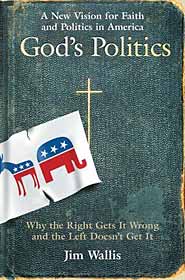
God's Politics

Jim Wallis has been making a rather big splash lately. His new book, God's Politics : Why the Right Gets It Wrong and the Left Doesn't Get It is currently number 10 on the Amazon Bestseller List.

He has made appearances all over the TV, reiterating his key idea: He believes that God cannot be pleased with the Right's definition of what "moral values" are, and he cannot be pleased with the Left's total disregard of moral/religious issues.

Read an article excerpted from the book at Sojourners' website (www.sojo.net)

2/07/2005

Beginner’s Guide to Worldview Jargon

My friends Byron Harvey and Paul Oyler have been talking a lot about worldview lately.

I recently came across this very nice article from my man Byron Borger at the CCO (Coalition for Christian Outreach). Here is an edited version of it.

Beginner’s Guide to Worldview Jargon

Creation-Fall-Redemption:
I hardly need to mention this—you'll hear it so much. Still, the point is that the biblical view of life includes the profoundly wonderful idea that this is God's world, sin has radically distorted everything and Jesus is big enough to make it all good again. The implications of seeing such a continuous flow to the unfolding biblical drama should chill us to the bone and compel us to praise and worship and unceasing service.

All of Life Redeemed:
Not only a book (out of print) written by former CCO staff, but a slogan calling us to work out the implications of the Lordship of Christ over every area of life. Because God is bringing restoration to the creation, we can with confidence seek His will "on Earth as it is in Heaven."

Creational Ordinances/Law Structures:
God has built into His creation structures and laws which provide norms for the opening up of our lives and culture. In other words, marriage or the state, or the possibilities for art or science are not human inventions but have been put into the fabric of reality; the principles which govern them are not arbitrary or relative. A Christian worldview would consider not just how sin has messed things up, but the abiding laws God upholds in his creation.

Dualism:
…as in "No Dualism!" The unbiblical assumption that life is divided into two parts (the sacred and the secular, the realm of nature and the realm of grace. Hence, the derogatory phrase, "that's nature/grace!"). Dualistic views always lead to an irrelevant super-spirituality applied to only a few areas of life and thereby yielding vast territory to Satan.

Worldviews:
Not just your view of the globe, but your fundamental convictions and assumptions about the meaning of life, the nature of good and evil, your view of humankind, your values and overall life perspective.

Glasses/Lens:
All of life is seen through a grid, a lens, spectacles (to use Calvin's metaphor for Scripture). Worldviews function in life as a pair of glasses coloring how you see things. We need a biblical worldview to see and perceive life as God intends. Nothing is more urgent or practical than polishing our lenses to see properly.

Ground Motif:
The idea that certain worldviews or ideas gain influence and shape the development of society. Worldviews are not just individual; certain ones become the dominant ways societies order themselves. They are rooted in and also give rise to idolatry.

Presuppositions:
That which is pre-supposed, assumed, a priori. Underlying ideas/beliefs which form the foundation of worldviews. Often not spelled out or made explicit.

Pre-theoretical:
The most foundational beliefs are heartfelt (and are therefore religious in nature) and they shape, color and help determine the nature of scholarship, philosophy, science and theology. Theories about things taught in the classroom (or assumed by the media or pop culture) are rooted in a priori religious convictions.

The Myth of Objectivity:
Secular science since the Enlightenment (mid-1700s) has presumed that there are no pre-theoretical, faith-like commitments which shape or color the doing of scholarship or science (and if there are, that then is bad science). This is one of the bastions of the rationalistic worldview.

Rationalism:
A faith (i.e. pre-theoretical) in the ability of human reasoning to objectively reach all Truth. Most Rationalists deny that they have faith in their own starting point, but that it is just an objective truth.

Saere Aude!:
Have the courage to use your own mind without the guidance of another, from Kant's "What is Enlightenment" (1784). In other words, "grow up—reject those old religious (non-scientific) superstitions from the Dark Ages and don't let faith prevent you from doing whatever you want."

Lumen Natural:
The "natural light" of Reason. In the secular Enlightenment worldview, Reason replaces God's revelation. Who needs Scripture (or even God) when reasonable people can think up their own ideas? In the French Revolution, a ceremony was held after taking over the cathedral in Paris where "goddess Reason" was crowned.

"We will never be free until the last king is strangled with the entrails of the last priest" (a popular slogan of the French Revolution). That seems to sum it up quite nicely, huh?

"We hold these truths to be self evident…" Self evident? The natural light of Reason is all you need. Although there are considerable differences between the American Revolution and the French, we should not underestimate the similar intellectual roots.

"Smash the infamous!" Voltaire, a philosopher/statesman of the French Revolution, used to correspond with his friend and soul mate, Ben Franklin. They would often jokingly call each other "anti-Christ" and sign letters with this call to destroy the Catholic Church (and, presumably, all constraints of the Christian God).

A Common Faith:
A very influential book by the father of the America public school system, John Dewey. A scientific-minded pragmatist, Dewey said in this book (and in his travels throughout, among other places, western Pennsylvania) that schools should propagate a faith in Reason to unite all Americans, away from the divisive sectarian fights. Dewey didn't oppose Christianity, as long as it was secondary to a unifying, reasonable, pragmatic, American faith in the public square.

Secularization:
The process whereby God's Word and norms are increasingly seen as irrelevant to a society's corporate life. Personal faith tends to be private and inadequate to relate to public affairs.

"I believe in God, family and McDonalds, but when I go to work, I reverse the order." —Ray Kroc, founder of McDonalds, Inc. Secularism at its finest.

"A Better World Through Westinghouse." —famous ad slogan, circa 1968.

"Greed is good." —Gordon Geko, in the movie, Wall Street. A brief paraphrase of the famous Enlightenment rationalist, Adam Smith, father of capitalism.

Romanticism:
A philosophic movement which arose (out of the non-rational half of Imannual Kant's dualism) in reaction to the reductionism and over-reliance on Reason, science and greed on the part of Enlightenment secularists. Influenced by the imaginative and mystical poetry of Coleridge, Wordsworth and, later, Ralph Waldo Emerson, et. al., anti-rationalistic romanticism is a major influence on the hippie counter-culture, gays, greens and grunges. (Check out recordings of Van Morrison who gives it a Christian slant.)

"And we've got to get ourselves back to the garden…" —Joni Mitchell (Woodstock). Immortalized by Crosby, Stills and Nash. And they weren't talking about CFR, either.

Julia Roberts teaching Richard Gere (in Pretty Woman) how to throw away his car phone and walk barefoot in the grass may be better than him walking on concrete in wingtips, but it is still a far cry from the Kingdom of God.

Paraphrase of author John Alexander in The Secular Squeeze, where he shows how counter-cultural Romanticism arose as a response to rationalism and how it may seem attractive to Christians seeking an alternative to the dominant worldview.

Third Way:
A shorthand slogan suggesting that Christians should be uniquely and distinctively biblical and therefore radically different from the traditional cultural and religious life options. A biblical worldview is neither conservative nor liberal, progressive nor traditionalist, rationalist nor romanticist, left nor right, but an entirely alternative community: a third way.

Reformational:
A word coined to describe a new brand of Calvinists who take the ideas of the Protestant Reformation beyond theology and abstract debates about the nature of the atonement and church life and rather seek to bring about Christian cultural change and social transformation. Serious, lasting change, however, can only come about after serious and radical re-formation of the philosophical assumptions currently deforming each sphere of culture. Reformational folk realize that to be "light in the darkness," we need to re-think the inner structures of each academic discipline which shape each area of life.

Abraham Kuyper:
A journalist-statesman-theologian-organizer-pastor of a great period of reformation in the Netherlands in the late 1800s and early 1900s who emphasized the need for Christian renewal in each sphere of cultural life. (The phrase "sphere sovereignty" comes from Kuyper, which means that God has given norms for each area of life which Christians can open up and obey without the church itself running everything.) His famous Stone Lectures at Princeton (1898) argued for a Calvinist perspective in the arts, business, science, etc. The great-grandfather of the Jubilee conference. Also the founder of the first Protestant University, a Christian daily newspaper, a Christian farmers association and a major Christian political party (through which he became the Prime Minister in 1901). Strong emphasis on the "cultural mandate" of Genesis 1:26-28.

Herman Dooyeweerd:
A heavyweight Dutch philosopher who taught law at the Free University of Amsterdam (founded by Kuyper) in the mid-1900s (he died in the late 1970s). Dooyeweerd was a forerunner of the whole idea of a uniquely and distinctively Christian philosophy and a major influence on Francis Schaeffer and other young evangelicals of the past 50 years. He critiqued the myth of objectivity and exposed the self-contradictory dualisms in humanist thought. Described the multi-dimensionality of humans and showed how the convictions of the heart shape and give life direction and worldview.

Whole-Life Discipleship:
The official CCO phrase which suggests that you are professionally obliged to do evangelism (calling people into the Kingdom) and disciple-making (equipping them to serve in the Kingdom) in a way which emphasizes Christ's sovereign and royal claim over the totality of life, particularly in the development of a Christian view of academic work and career preparation. A Kingdom vision of multi-faceted, "whole-life discipleship" influences how we share the gospel, how we mentor young disciples, how we view our cooperative relations and how we pursue our own faith development. It intentionally and consciously reflects a reformational worldview and underscores the CCO's uniqueness of vision and expectations for ministry within the context of higher education.


Byron Borger is an associate staff member of the CCO who first came on staff in 1976. He and his wife, Beth, own and operate Heart & Minds Bookstore in Dallastown, Pennsylvania, and Byron writes a monthly column for our staff newsletter, the Ministry Exchange. This guide to worldview jargon was originally presented to new CCO staff when Byron taught the New Staff Training Worldviews course. © Coalition for Christian Outreach 2001

2/01/2005

Time Magazine's "The 25 Most Influential Evangelicals in America"

Wow. The list is surprising in some ways. I like how they identified some who are relative unknowns but are still very influential on the evangelical population in America. Very insightful.

1. Rick Warren
2. Howard and Roberta Ahmanson
3. David Barton
4. Douglas Coe
5. Charles Colson
6. Luis Cortes
7. James Dobson
8. Stuart Epperson
9. Michael Gerson
10. Billy and Franklin Graham
11. Ted Haggard
12. Bill Hybels
13. T.D. Jakes
14. Diane Knippers
15. Tim and Beverly LaHaye
16. Richard Land
17. Brian McLaren

18. Joyce Meyer
19. Richard John Neuhaus
20. Mark Noll
21. J.I. Packer
22. Rick Santorum
23. Jay Sekulow
24. Stephen Strang
25. Ralph Winter

I must admit, there's 8 names that I would not have identified on this list...
...But the person who has most influenced me in the last few years is listed at number 17.


TIme Magazine


1/31/2005

Imago Dei - The Image of God in Man

In our small group community, oasis, I've been teaching about the all-important doctrine of the "Image of God." In doing so, I've adapted the chart from Michael E. Whitmer's excellent book Heaven is a Place on Earth: Why Everything You Do Matters to God.

This over-arching understanding of the purpose of our humanity should drive all that we do--from our worship to our relationships to our work.

Check it out here:


Image Dei-The Image of God in Man

Why Sing a Song?

Check out what Bill Arnold wrote about living the Christian life right here and now:

Why Sing a Song? "You don't sing to get to the end of the song."


1/27/2005

Top 5 Books I Read in 2004 (#3)

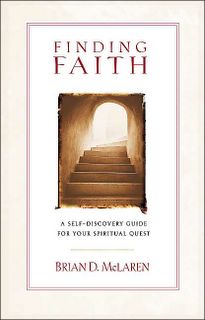
Finding Faith: A Self-Discovery Guide for Your Spiritual Quest by Brian McLaren

Each year, I re-read this incredible book. For anybody who wishes to better communicate the Gospel to the unchurched, this is the first Apologetic Book specifically targeted at the postmodern person.

I enjoy reading McLaren's authentic and engaging style as he builds the case for Christ in a new way, a way that better connects with people in the 21st Century. Through reading McLaren's thoughts, I've found myself better able to articulate my faith to people who have yet to meet Christ. It's like being an apprentice to a great evangelist--watching him do it so masterfully and learning the art and science of sharing your faith.

The great apologists of the modern era (Geisler, Schaeffer, Guinness, Kreeft, Lewis, Habermas, Zacharias, etc.) are still helpful, but to reach a new postmodern culture, I think McLaren's style will go a lot farther.

I've probably given away over 2 dozen copies of this book to friends with whom I have conversations about faith in Jesus Christ.

Top 5 Books I Read in 2004 (#5)

technorati:

1/18/2005

The Scandal of the Evangelical Conscience

A Conference from Evangelicals for Social Action

"Whether the issue is divorce, materialism, sexual promiscuity, racism or physical abuse in marriage, the polling data point to widespread, blatant disobedience. The statistics are devastating. This scandalous behavior mocks Christ, undermines evangelism, and destroys Christian credibility." -Ron Sider

Speaking:
Assessing the Scandal - Mark Noll, Professor of History, Wheaton College, Wheaton IL
What Went Wrong - Randall Balmer, Professor of Religion, Barnard College, Columbia U.
What Can Be Done - David Neff, Editor, Christianity Today
Panelists: Andy Crouch, Chris Hall, Ellen Charry, Jo Anne Lyon, Wallace Smith, Bill Borror, Dean Trulear, Mark Noll


Eastern Baptist Theological Seminary Chapel
Wynnewood PA
Sunday 7pm (Registration at 6) March 6th, Monday 9-4 March 7th, 2005

For more information:
http://www.esa-online.org/pdfs/conference_poster.pdf

Register with ESA online at
http://www.esa-online.org/ or phone 610-645-9390, 800-650-6600
$75 ($65 before Feb. 5), Students $30
Each registration includes a complementary copy of Ron Sider's book, The Scandal of the Evangelical Conscience. Read an excerpt from the book at CT's
Books and Culture website.


1/15/2005

Top 10 Myths of Disaster Relief

Aid groups address public stereotypes about overseas disasters

I thought this was a very helpful article from World Vision.
--Bob

SEATTLE – As they fight to save lives in the wake of the Asia disaster, aid workers also must address myths about disaster relief among the American public. Rich Moseanko, a relief director for World Vision, the Christian relief and development organization, explains the truth behind the top 10 myths of disaster relief.

1. Americans can help by collecting blankets, shoes and clothing. The cost of shipping these items – let alone the time it takes to sort, pack and ship them – is prohibitive. Often, those items are manufactured for export to the U.S. from these same countries. It is far more efficient to purchase them locally. Cash is the better solution.

2. Helping the living always has priority over burying the dead. In refugee camps and epidemic situations where people die of diseases, it is essential to dispose of the bodies within a short period of time. If they died of other causes such as drowning, they are less of a health risk but pose an impediment to relief efforts and delay the mourning process.

3. The United States must airlift food and medicines to the disaster site. Food is virtually always available within a day's drive of the disaster site. Purchasing the food locally is more cost-efficient, and it ensures that the food is appropriate to local residents' tastes and religious requirements. Medicines are often available within the country, too. India, for example, has a large pharmaceutical industry. Because medicines are high-value, low-weight commodities, in some cases they can and must be airlifted in to save lives.

4. If I send cash, my help won't get there. Reputable agencies send 80 percent or more of cash donations to the disaster site; the rest goes for administration, operating expenses and monitoring the efficiency of their own operations. Donors have a right and a responsibility to ask aid groups how they will be using those donations, and what will be done with donations raised in excess of the need.

5. Once someone survives the immediate disaster, he or she is safe. The immediate catastrophe kills quickly; survivors can face a slower death from hunger, disease and even criminal predators. While emergency medical teams certainly are needed for people injured in a disaster, the best way to keep survivors healthy is to provide clean water and adequate sanitation. Cholera and dysentery can result from drinking contaminated water; malaria-spreading mosquitoes breed in standing water.

6. Developing countries depend on foreign expertise. While specialized assistance is always welcome, most relief and recovery efforts are accomplished by local aid groups, police, firefighters and neighbors before international teams arrive. Also, in recent years most governments have established disaster preparedness plans.

7. Relief needs are so intense that almost anyone can fly to the scene to offer help. Professionals with specialized skills and overseas disaster experience are often deployed to disaster sites. Volunteers without those skills can do more harm than good, and siphon off critical logistics and translations services. Hiring qualified disaster survivors is much more cost efficient and provides much needed employment.

8. Survivors feel lucky to be alive. Shock, trauma and the mourning for loved ones who died are common among disaster survivors. Often, they wish it was they who died instead of their loved ones. Treating these emotional needs is an essential component of relief efforts.

9. Insurance and governments can cover losses. The vast majority of the world's population has never heard of an insurance policy, let alone are able to purchase one. Further, governments of poor countries can barely meet ongoing social service needs, let alone provide a safety net like FEMA. Disaster survivors must bear these costs alone.

10. People are helpless in the face of natural disasters. The United States is proof that tougher building codes, early warning and disaster preparedness can save lives. Even in poor countries, communities are taking steps to mitigate the loss of life in future emergencies.

For more information on World Vision's response, or on ways the public can help, please click here or phone 888-56-CHILD.

I'm Glad to Be a Part of Planet Emergent

This new blog is a gathering place for emergent-type people. When they write a new post on their individual blogs, these posts get reposted at Planet Emergent.

This way, you can read and interact with a wide variety of people as they log their thoughts on the web.

Check it out here:


1/13/2005

Further reflections on Brian McLaren, Steve Camp, and D.A. Carson

In my discussions with Steve Camp about Brian McLaren, I found that what Steve objected most to was McLaren’s re-tooling Calvinism’s TULIP doctrine (you see, his review at audienceOne was specifically about those pages in McLaren’s new book A Generous Orthodoxy in which McLaren came up with a new TULIP).

Having studied under D. A. Carson at Trinity (and listening to his lectures from Cedarville) and having had this discussion with Steve Camp, I believe that what they find troubling about Emergent is the openness to reconsider Calvinism. They are convinced that Calvinism is the purest form of Christianity, and they reject the notion that it is a theological framework that arose from a specific cultural context—a context of modernity, the enlightenment, and the rise of the city-state. To the Reformed Evangelical Christian, the Reformation is the single most important event in the history of the Church, the event that correctly defined the Gospel.

We need to do a better job of explaining how the Gospel of Atonement has been re-articulated throughout history in thoroughly biblical ways (including the Reformers). We need to explain that we are very indebted to what those great men did in the 1600s, just like we are indebted to others throughout Christian history—the Gospel of Jesus Christ has been able to speak to all people in all times.

We also need to convince these brothers in Christ that we are entering into a dramatically new and different age—what we are calling “postmodernity” for a lack of a better name. We need to work on articulating a biblical gospel that fits this era of time. To do so, we must exegete the Bible AND the Culture, seeking to figure out which of the many ways the Bible explains the grace of God in Christ best speaks to what people in our age will understand and respond to.

With lots of respect for Carson and Camp, I feel that if this means coming up with a new TULIP, so be it.

Read my conversation with Steve Camp here.

Top 5 Books I Read in 2004 (#5)

Matt Mitchell, the administrator of the yahoo forum for the Evangelical Free Church Allegheny District, asks each year for ministry-related book reviews to be posted. I offered the top 5 books I’ve read in 2005.

Here on the blog, I will do a countdown of those top 5.

At Number 5...
The Search to Belong: Rethinking Intimacy, Community, and Small Groups
by Joseph R. Myers

For those of us who have been banging our heads against the wall trying to figure out how to get small groups to work, this book is a breath of fresh air.

Myers contends that there are actually four "Spaces of Belonging": Public, Social, Personal, and Intimate. He says it is wrong to try to force people into Personal and Intimate relationships, that these must arise out a process of friendship-building and individual choice. And we do people a disservice in churches when we place too much pressure on these two and do not legitimatize the first two as important as well.

He recommends we see our pastoral ministry as creating "environments" in which people will feel that they belong 100% in Public Space and Social Space and in which people can choose for themselves with whom they want to enter into "Private" and "Intimate" relationships.

technorati:

1/12/2005

Christian "Moral Values" and Bush's Choice for Attorney General

Now, I know that a lot of us evangelicals voted for George W. Bush on the grounds of "moral values." That story has made all the news. Okay.

That’s why I am troubled. I wonder why I have not heard more evangelical Christians upset about the way the Bush Administration reinterpreted the rules for the use of torture. The Bush team departed radically from convention when it loosened long-standing rules governing the interrogation of prisoners. This change is something that’s been known since last June when the Justice Department memo from Attorney General designate Alberto Gonzales was sent to Bush describing aspects of the Geneva protocols against torture as "quaint" and "obsolete." The man that Bush has nominated as the top prosecutor of American law played a large role in orchestrating, if not actually drafting, a change in our country’s stand on torture!

But we Christians are not saying a thing during Gonzales’ confirmation hearings about this. And the Democrats are being creampuffs on Gonzales as well; in the words of Time Magazine, “Gonzales is certain to be confirmed as John Ashcroft's replacement, especially because Democrats are wary of opposing a Hispanic when their hold on that constituency was weakened in the last election.”

You’ve got to be kidding! You won’t call a guy out for putting the American stamp “OKAY” on torture because he’s Hispanic? You’ll let politics get in the way of truth? (Why am I surprised?)

The hearings did offer a few interesting tid-bits, however:

Senator Patrick Leahy got Gonzales to admit that he had consulted with the Justice Department's office of legal counsel about the torture memo. There were meetings in his White House office. Techniques like waterboarding—when they strap down a prisoner and make him believe he's going to drown—“may” have been discussed. Gonzales admitted that he did “generally support” the thrust of the Justice Department's decision to severely constrict the definition of torture. (In other words, since they wanted to torture people, they simply redefined 'torture' more narrowly, so that they could say, “We didn’t 'torture' anybody.”)

Senator Herbert Kohl got Gonzales to admit that the Bush Administration policy on torture had "migrated" to the CIA and Pentagon and from there to Guantanamo Bay and Abu Ghraib. (In other words, the atrocities at Gitmo and Abu Ghraib were at least an indirect result of the Bush Administration’s tinkering with the definition of torture).

Senator Richard Durbin asked a question that should have Christians who hold to “moral values” infuriated with the Bush Administration. Durbin asked whether or not, even after all the pressure to change our stand on torture back toward the Geneva conventions, United States personnel today could legally engage in torture under “any circumstances.” Gonzales answered, "I don't believe so, but I'd want to get back to you on that and make sure I don't provide a misleading answer."

What?! You’ve got to be kidding me! Why is the nominee for Attorney General waffling on this? Is it because he is still trying to redefine our nation’s definition of torture?

Don’t get me wrong; I think that in the war against terrorism, the use of aggressive, nonviolent interrogation techniques is often appropriate to get the information we desperately need to battle the evil of terrorism. But that is a far cry from what the Bush Justice Department has been advocating. Time reports, “In the summer of 2002, the CIA and Gonzales asked the Justice Department's Office of Legal Counsel for an opinion on the definition of illegal interrogation methods. On Aug. 1, 2002, Assistant Attorney General Jay Bybee sent Gonzales the following guidance: the President is within his legal limits to permit his surrogates to inflict ‘cruel, inhuman or degrading’ treatment on prisoners without violating strictures against torture. For an act of abuse to be torture, the interrogator must be inflicting pain ‘equivalent in intensity to the pain accompanying serious physical injury, such as organ failure, impairment of bodily function or even death.’ The definition of illegal torture had been significantly narrowed, which meant that anything short of that was O.K.”

Where’s the moral outrage from Christians over that?

1/10/2005

Green Ears, a Bow Tie, and an Inerrant Bible

Check out my friend Byron's interaction with some Emergent Church folk about the inerrancy of the Bible.

Again, I implore us to keep the Bible as our central authority.

We can articulate theology in fresh, and even radically different, ways. But please, please, prove it from the Bible!

To quote Byron, "What is the Bible?" Is the Bible God's Word TO us, or is it man's word ABOUT God?"

When we decide that the Bible is nothing more than man's testimony about God, and not the God-breathed Word from God, then we are relying on the best ideas of men (which is nice, but nowhere near as great as relying on the very WORDS OF GOD!)

Byron Harvey's "A Ticking Time Blog"