

In my last post on John MacArthur's book critiquing the Emerging Church (MacArthur Fits His Own Criteria for an Apostate), I ended up doing to MacArthur what he does to the Emerging Church.
MacArthur makes too sweeping of statements, applying Jude's statement about false teachers in Jude 4 ("For certain men whose condemnation was written about long ago have secretly slipped in among you. They are godless men, who change the grace of our God into a license for immorality and deny Jesus Christ our only Sovereign and Lord) to Rob Bell, Brian McLaren, Stan Grenz, John Franke, John Armstrong, Chris Seay, and Donald Miller - calling them "apostates." This is a brazen way to disagree with people - to accuse them of denying Jesus Christ and condemning them to damnation. This kind of careless accusation breaks the ninth commandment: “You shall not give false testimony against your neighbor."
However, in my zeal to show this and to help people see that MacArthur's category of "apostate" is too wide and too nebulous, I sought to show that his dispensational theology would fit his own categories of an "apostate."
Lewis Sperry Chafer, one of the key formational dispensationalists some 100 years ago famously said,
“The dispensationalist believes that through the ages God is pursuing two distinct purposes: one related to the earth with earthly people and earthly objectives involved which is Judaism; while the other is related to heaven with heavenly people and heavenly objectives involved, which is Christianity.”
As Mark Noll wrote in The Scandal of the Evangelical Mind,
"The supernaturalism of dispensationalism... lacked a sufficient place for the natural realm and tended toward a kind of gnosticism in its communication of truth." (p. 132)What I was trying to articulate is this: Since gnosticism is not a Christian teaching, and since MacArthur is a dispensationalist, his accusation that the Emerging Church is apostate opens himself up to that same false accusation. His category of "apostate" is so nebulous, that the great Lewis Sperry Chafer can be called one.
However, I was not clear that MacArthur's brand of dispensationalism is more developed and nuanced than Chafer's. Therefore, my point was lost. Just as it is not right to make sweeping statements about a broad group based on the views of one or two people in that group, it is not right to make sweeping statements about a single person based on their identifying as being a part of a broader group. So, I apologize.
However, my point still remains: When we brazenly call people apostates, we had better be unequivocal about what exactly that apostasy is, identifying specific actions of those being accused and specifically pointing to the Bible to show where these actions are clearly condemned. MacArthur, famous for his meticulous exposition of Scripture, freely applies the exacting standard of Jude to the Emerging Church without proving it is the case (except to say, falsely, that they reject "truth").
If we were to use MacArthur's nebulous application of Jude 4, we could level the accusation of apostasy against just about anyone.
technorati: emerging church, books, theology, postmodernity, postmodernism,
 I’d like to juxtapose three statements by John MacArthur in order to show that, while MacArthur is quick to label other Christians “false teachers” and “apostate,” these labels can just as easily be leveled unfairly at MacArthur.
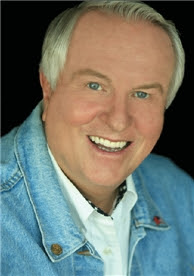 I ate lunch with Josh McDowell today. Some ministry leaders in Northeast Ohio got together to hear him talk about how we can reach young people in a post-Christian culture.
 He said that Behavior comes from Values and that Values come from Beliefs. But at the base of all this is Relationships. So his first mandate to today’s ministries is “loving, intimate connections with our kids.” He said that the Bible says that we must have both “truth” and “love,” or we are
  MacArthur places a spotlight on Stan Grenz and John Franke’s book (
 The title of John MacArthur’s book should give us a clue to its major premise.

 John MacArthur’s latest book seeks to take up the battle against those he claims have crept into the contemporary church as Christian teachers, but are actually denying the truth of Jesus Christ.
 When I first came to faith in Jesus Christ, one of the first books I read was