Here are two ways of dealing with the tsunami tragedy theologically. Both of these responses are from theologians I highly admire, yet one seems to make more sense to me (I won't say which one, please comment and tell me what you think I like better, and tell all of us which one makes more sense to YOU!)
John Piper: Tsunami, Sovereignty, and Mercy
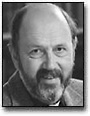
N. T. Wright: Meanings of Christmas: In the new world there will be no more sea

a web resource . exploring missional horizons . navigating spiritual formation . journeying into vocational-incarnational living
1/06/2005
The Battle Against Emergent Begins
Recently on Doug Pagitt's blog, he wrote "A number of us have been suggesting for years that at some point the people who are not so pleased with the suggestions of theological and methodological changes people within Emergent are suggesting would start to express their opinions and start causing trouble. And that when it happened the accusations would become personal and relentless. I think it is fair to say that 2005 will be that year."
He cites some recently written books and presentations and websites that are attacking Brian McLaren and himself and the others of Emergent.
But then he says, quite appropriately,
"So, it is time to take up battle positions.
I suggest these Battle Positions:
A Smile
A Wink
A Prayer
A friendly Email
Offers of hospitality
Invitation to Friendships"
A great reminder.
I followed the links he offered and found Steve Camp's website "audience One," on which Camp gives an unfavorable review of McLaren's new book A Generous Orthodoxy.
I wrote to Steve Camp, offering my opinion of his critique of Brian McLaren. He graciously replied via e-mail, and we went back and forth a few times. You can read the e-mail conversation here.
Read other's reactions to Doug Pagitt's call for gentle battle stations here.
12/12/2004
A Christian parent wants nothing more than this:
For his or her children to love God.

We know that the greatest gift we can give our children is the opportunity to have faith in God through Jesus Christ. So it can be gut-wrenching to watch a child rebel against this, and a test of our patience and endurance as we allow the process to happen (trusting in God’s grace), instead of forcing it to happen.
Trey, our six-year-old, has struggled so far with the whole “God-thing.” He knows that Mommy and Daddy “love Jesus” and that it’s a very real and important thing to us. But he has not liked Sunday School classes or a lot of the Christian stuff we do. When we have times when we sit down and talk about Jesus or read a Bible story, Trey would usually harrumph and pout and sometimes get down-right angry. This has been very stressful on Linda, because the twins (Joel and Kaira) seem so much more open to God than Trey. Linda has been wonderful in her endurance through this trying time, she continues to show grace and love even when Trey's words and actions can deeply irritate and even hurt her.
But we continued to pray (especially Linda, who made it a daily priority). The only thing that softens a heart that's hard to God is God's divine love--we can't do this, only God can do this. God's grace replaces a heart of stone with a spiritually awakened heart (Ezekiel 36:26).
Anyway, lately we have seen a turn-around in Trey’s attitude. He told Linda that he wants to get Daddy “The Passion of the Christ DVD.” When Linda asked him why, he replied, “Because Daddy loves Jesus.”
Then one day, he said to Linda (kind of out of the blue), “You know what Mommy? I think everybody in this house loves God.” Linda couldn’t believe her ears. “Everybody, Trey?” “Yea, everybody.” “You too?” “Yea, me too.” Linda cheered and danced around and gave him a big hug, and he had the biggest grin on his face—that kind of grin that proudly says, “I did the right thing, and I’m glad!”
Then this last Sunday, Trey decided he wanted to sit with us in the main worship service at church. In his sermon, the pastor at the church we’ve been attending on Sunday mornings, Greg Nettle, told a story about his 6-year-old daughter. At Thanksgiving, the members of his family were all saying what they were thankful for, and Tabitha said she was thankful for Jesus. Greg said, “Oh! How it warms a parent’s heart when they hear their child say something like that. I guess when they’re around parents who love Jesus, it kind of rubs off on their children.”
Right at that moment, Trey turned to Linda and me and gave this look—a half smile, half “See? What did I tell you?” look—that will be the most treasured image in my mind for years to come. He then turned and looked intently at the preacher, while Linda and I tried not to be too disruptive with our laughter.
We were laughing for two reasons—(1) simply because Trey’s look was just so hilarious, and (2) because Trey’s actually getting it! We are laughing with a deep, deep joy.
Thank you, God, for your grace. We look forward to the continued journey of faith (both the ups and the downs) with these children!
12/08/2004
What if Democrats Were Pro-Life?
For many evangelicals, abortion remains the central issue in our society. And we vote accordingly. Many of us voted for Bush mainly because of his pro-life stance. The Republican Party did a masterful job of claiming the pro-life issue, and Christians responded in kind.
What would happen if Democrats changed their tune on abortion? A group called Democrats for Life claims that if the Democratic Party altered its pro-abortion rights stance, it would help Democrats win future elections. Kristin Day, Executive Director of Democrats for Life said, "I think we really need to look at our strong pro-abortion stance and really come out and say that we want to truly make abortion rare."
But Jenny Backus, a spokeswoman at the Democratic National Committee has said Day is out of touch with the party's position: "We're proudly pro-choice. It doesn't mean you're for or against abortion. It means that you believe people should have the choice."
But the anti-abortion Democrats say that it comes down to two choices — Democrats either have to be more tolerant of anti-abortion Democrats or they have to accept more Republican victories in future elections.
I find it very interesting that the new Senate Minority Leader for the Democratic Party, Harry Reid, has voted mostly pro-life!
For more from the "donkey's mouth" on this, read this editorial by Kristen Day published in National Review:
A Pro-Choice Party No More: If every vote counts, why does the Democratic party ignore pro-life Democrats?
12/06/2004
Stem Cells can help the paralyzed stand up and walk!
According to Dennis Byrne, writing in the Chicago Tribune, stem cells can help the paralyzed stand up and walk. "On Thanksgiving Day, a South Korean woman, Hwang Mi-Soon, paralyzed for 20 years after a spinal-cord injury, rose from her wheelchair and, tearfully and with the help of a walker, took a few steps."
"Why didn't Hwang make the front page of every American newspaper?" Byrne asks. "It's because the stem cells used in Hwang's therapy were from umbilical-cord blood instead of embryos." Because the media has pushed so hard for embryonic stem-cell research, they weren't too interested in a medical cure that didn't cross ethical boundaries.
"Adult and cord stem cells hold as much, if not more, promise as the embryonic types. For years, [they have] been used to treat leukemia. The good news about adult and cord stem-cell advances flows so steadily, it's hard to imagine how a journalist with any news judgment could ignore it."
source: ctmag weblog
See the google search for where this story was reported
12/01/2004
The Myth We've Been Told About the Faith of Our Founding Fathers
Some ill-informed people have perpetuated the myth that America's Founding Fathers were all evangelical Christians.
 I offer the following insights from the excellent book, The Search for Christian America by Mark A. Noll, Nathan O. Hatch, George M. Marsden. These three men are regarded as three of the finest historians on American religious history. And all three of them are evangelical Christians. Noll is Professor of History at Wheaton College, Hatch is President-Elect and Professor of History at Wake Forest University and former Provost and Director of Graduate Studies in History at Notre Dame, and Marsden is Professor of History at Calvin College.
________
The Faith of the Founding Fathers
It is difficult for modern Americans to recapture the religious spirit of the country’s great early leaders—George Washington, Thomas Jefferson, Benjamin Franklin, and their colleagues. The difficulty arises because these brilliant leaders, surely the most capable generation of statesmen ever to appear in America, were at once genuinely religious but not specifically Christian. Virtually all these great men had a profound belief in ‘the Supreme Judge of the world’ and in ‘the protection of Divine Providence,’ to use the words of the Declaration of Independence. Yet only a few believed in the orthodox teachings of traditional Christianity—that, for example, Christ’s death atoned for sin, that the Bible was a unique revelation from God, or that the miracles recorded in Scripture actually happened.
There were, to be sure, a few founding fathers who affirmed the cardinal tenets of orthodox Christianity…John Witherspoon…Patrick Henry, an evangelical Anglican… (and) John Jay, co-author of the Federalist Papers, the first Chief Justice of the Supreme Court, and like Henry, an Anglican of decidedly evangelical sentiments.
Most of the early leaders, however, did not share the Christian convictions of Henry and Jay.
Thomas Jefferson’s views are perhaps best known…the deity of Christ and his resurrection, the Trinity, the divine authority of Scripture—these were the ‘deliria of crazy imaginations.’
Benjamin Franklin…saw Christ primarily as a moral teacher and true religion as an expression of perfectible human nature.
George Washington was a reserved man who did not express his inward feelings easily on any personal matter, least of all religion…A recent biographer, Marcus Cunliffe, sums the matter up well: "It is true that he was a sound Episcopalian, but his religion, though no doubt perfectly sincere, was a social performance…He was a Christian as a Virginia planter understood the term. He seems never to have taken communion; he stood to pray, instead of kneeling; and he did not invariably go to church on Sundays."
The God of the founding fathers was a benevolent deity, not far removed from the God of the eighteenth-century Deists or nineteenth-century Unitarians…They were not, in any traditional sense, Christian. What historian Daniel Boorstin, now Librarian of Congress, once wrote about Jefferson and his friends applies to most of the founders: they had found in God what they most admired in men. (pp. 72-74)
One of the frequent themes (in the history of the United States) is the declaration of Americans that their nation is like a New Israel. From Puritan New England to the popular Christianity of today rings the refrain that America is to be understood not only in the light of Scripture, but especially through the parts of the Old Testament which describes the Hebrews as God’s special people.
For just as long, however, another heritage, going all the way back to Roger Williams, has questioned the America-as-Israel theme…Many Baptists, especially when concerned about the separation of church and state, have followed Williams in this New Testament emphasis. Anabaptists and most Lutherans in America, preserving older Reformation traditions, also have usually refused to seek political manifestations of the Kingdom. Revivalists from a variety of heritages have urged a simple New Testament message of personal salvation while carefully steering clear of any divisive social-political issues.
Even within the more Calvinistic tradition one important nineteenth-century teaching said that America was more like Babylon that like Israel. This was dispensationalism, which eventually spread widely in twentieth-century fundamentalism and Pentecostalism, which specifically repudiated the idea of ‘Christian’ nations or new Israels.
It is remarkable then that, despite so much in America’s theological heritage which repudiates political programs to establish a biblical nation or New Israel, these ideals persist with such power. Especially notable is the fact that these ideals flourish in some traditions where one might not expect them. So we find Jerry Falwell, a Baptist and a dispensationalist, directly repudiated his earlier view that clergy should stay out of politics. Falwell’s change of heart reflects his adoption of Puritan Old Testament models for understanding Christianity and the nation… America is to be brought back to her Christian heritage through political action. ‘It is time,’ proclaims Jerry Falwell, ‘for Americans to come back to the faith of our fathers, to the Bible of our fathers, and to the biblical principles that our fathers used as a premise for this nation’s establishment.’ Tim LaHaye concurs. Christians, he urges, must ‘vote in pro-moral leaders who will return our country to the biblical base upon which it was founded.’ (pp. 124-126)
Here then is the "historical error": It is historically inaccurate and anachronistic to confuse, and virtually to equate, the thinking of the Declaration of Independence with a biblical world view, or with Reformation thinking, or with the idea of a Christian nation. In other words it is wrong to call for a return to "Christian America" on two counts: First, for theological reasons--because since the time of Christ there is no such thing as God's chosen nation; second, for historical reasons, as we have seen--because it is historically incorrect to regard the founding of America and the formulation of the founding documents as being Christian in their origins. Yet this error is one of the most powerful ideas of our day. (p. 130)
Does it really matter if people hold to this mistaken view that America is, or was, or could become a truly Christian nation? Yes, it does matter. It matters because, if we are going to respond effectively to relativistic secularism, then we need to base our response upon reality rather than error. This is not to deny the positive influence that Christianity has indeed had upon the American way of life. Rather, it is to take it all the more seriously so that we may respond to it all the more effectively. (p. 131)
I offer the following insights from the excellent book, The Search for Christian America by Mark A. Noll, Nathan O. Hatch, George M. Marsden. These three men are regarded as three of the finest historians on American religious history. And all three of them are evangelical Christians. Noll is Professor of History at Wheaton College, Hatch is President-Elect and Professor of History at Wake Forest University and former Provost and Director of Graduate Studies in History at Notre Dame, and Marsden is Professor of History at Calvin College.________
The Faith of the Founding Fathers
It is difficult for modern Americans to recapture the religious spirit of the country’s great early leaders—George Washington, Thomas Jefferson, Benjamin Franklin, and their colleagues. The difficulty arises because these brilliant leaders, surely the most capable generation of statesmen ever to appear in America, were at once genuinely religious but not specifically Christian. Virtually all these great men had a profound belief in ‘the Supreme Judge of the world’ and in ‘the protection of Divine Providence,’ to use the words of the Declaration of Independence. Yet only a few believed in the orthodox teachings of traditional Christianity—that, for example, Christ’s death atoned for sin, that the Bible was a unique revelation from God, or that the miracles recorded in Scripture actually happened.
There were, to be sure, a few founding fathers who affirmed the cardinal tenets of orthodox Christianity…John Witherspoon…Patrick Henry, an evangelical Anglican… (and) John Jay, co-author of the Federalist Papers, the first Chief Justice of the Supreme Court, and like Henry, an Anglican of decidedly evangelical sentiments.
Most of the early leaders, however, did not share the Christian convictions of Henry and Jay.
Thomas Jefferson’s views are perhaps best known…the deity of Christ and his resurrection, the Trinity, the divine authority of Scripture—these were the ‘deliria of crazy imaginations.’
Benjamin Franklin…saw Christ primarily as a moral teacher and true religion as an expression of perfectible human nature.
George Washington was a reserved man who did not express his inward feelings easily on any personal matter, least of all religion…A recent biographer, Marcus Cunliffe, sums the matter up well: "It is true that he was a sound Episcopalian, but his religion, though no doubt perfectly sincere, was a social performance…He was a Christian as a Virginia planter understood the term. He seems never to have taken communion; he stood to pray, instead of kneeling; and he did not invariably go to church on Sundays."
The God of the founding fathers was a benevolent deity, not far removed from the God of the eighteenth-century Deists or nineteenth-century Unitarians…They were not, in any traditional sense, Christian. What historian Daniel Boorstin, now Librarian of Congress, once wrote about Jefferson and his friends applies to most of the founders: they had found in God what they most admired in men. (pp. 72-74)
One of the frequent themes (in the history of the United States) is the declaration of Americans that their nation is like a New Israel. From Puritan New England to the popular Christianity of today rings the refrain that America is to be understood not only in the light of Scripture, but especially through the parts of the Old Testament which describes the Hebrews as God’s special people.
For just as long, however, another heritage, going all the way back to Roger Williams, has questioned the America-as-Israel theme…Many Baptists, especially when concerned about the separation of church and state, have followed Williams in this New Testament emphasis. Anabaptists and most Lutherans in America, preserving older Reformation traditions, also have usually refused to seek political manifestations of the Kingdom. Revivalists from a variety of heritages have urged a simple New Testament message of personal salvation while carefully steering clear of any divisive social-political issues.
Even within the more Calvinistic tradition one important nineteenth-century teaching said that America was more like Babylon that like Israel. This was dispensationalism, which eventually spread widely in twentieth-century fundamentalism and Pentecostalism, which specifically repudiated the idea of ‘Christian’ nations or new Israels.
It is remarkable then that, despite so much in America’s theological heritage which repudiates political programs to establish a biblical nation or New Israel, these ideals persist with such power. Especially notable is the fact that these ideals flourish in some traditions where one might not expect them. So we find Jerry Falwell, a Baptist and a dispensationalist, directly repudiated his earlier view that clergy should stay out of politics. Falwell’s change of heart reflects his adoption of Puritan Old Testament models for understanding Christianity and the nation… America is to be brought back to her Christian heritage through political action. ‘It is time,’ proclaims Jerry Falwell, ‘for Americans to come back to the faith of our fathers, to the Bible of our fathers, and to the biblical principles that our fathers used as a premise for this nation’s establishment.’ Tim LaHaye concurs. Christians, he urges, must ‘vote in pro-moral leaders who will return our country to the biblical base upon which it was founded.’ (pp. 124-126)
Here then is the "historical error": It is historically inaccurate and anachronistic to confuse, and virtually to equate, the thinking of the Declaration of Independence with a biblical world view, or with Reformation thinking, or with the idea of a Christian nation. In other words it is wrong to call for a return to "Christian America" on two counts: First, for theological reasons--because since the time of Christ there is no such thing as God's chosen nation; second, for historical reasons, as we have seen--because it is historically incorrect to regard the founding of America and the formulation of the founding documents as being Christian in their origins. Yet this error is one of the most powerful ideas of our day. (p. 130)
Does it really matter if people hold to this mistaken view that America is, or was, or could become a truly Christian nation? Yes, it does matter. It matters because, if we are going to respond effectively to relativistic secularism, then we need to base our response upon reality rather than error. This is not to deny the positive influence that Christianity has indeed had upon the American way of life. Rather, it is to take it all the more seriously so that we may respond to it all the more effectively. (p. 131)
11/24/2004
On the globalization of economy

Tom Sine's Mustard Seed Versus McWorld is an essential book for Christians to understand the future effects of the developing global economy, and offers very practical ideas for Christians to offer Christ's "Mustard Seed" faith within it.
Here's a couple quotes from Sine:
"One of the essential conditions of economic globalization is that all businesses have unlimited access to the global labor pool to produce goods as efficiently as possible. This viewpoint insists that the employer has no responsibility either to the worker who loses his job in a car plant in Flint or to the worker who replaces him in Juarez. The employer’s singular responsibility is to show shareholders a profit. It is up to the free market to sort out the future for those in Flint whose jobs went south. And it is up the free market to set wages of workers in Juarez, even if the going wage is not enough to provide a decent way of life for their families.” (p. 59)
"Is the ultimate vision of 'something better' to be defined primarily in terms of economic growth, centralization, and efficiency, or is there something more?...Many of the advocates of this new global order define the ultimate primarily in economic terms. It appears that we are traveling into a future in which virtually everything in God’s creation, including human beings, will be reduced to a commodity and assigned a price…Deep down I think that most of us are not keen to see our lives and God’s creation reduced to an economic value, and McWorld is not our home. As followers of Jesus Christ, aren’t we sojourners in search of a better homeland?” (p. 67)
11/16/2004
N. T. Wright on Redemption
Here's some of what N. T. Wright says in his excellent lecture, Creation and New Creation in the New Testament
Redemption is not:
Romans 8:19-22 is not treated with the weight it needs to have—it teaches the renewal of all creation. Yet this section of Scripture is treated as mere embroidery around the edges of what we feel is "really important": the emphasis on individual, personal hope of heaven (at the expense of the larger picture of God’s redemption of all creation.)
"19For all creation is waiting eagerly for that future day when God will reveal who his children really are. 20Against its will, everything on earth was subjected to God’s curse. 21All creation anticipates the day when it will join God’s children in glorious freedom from death and decay. 22For we know that all creation has been groaning as in the pains of childbirth right up to the present time." (Romans 8:19-22)
By the way, this has implications on my "environmental wackoness":
“If the second coming is about people being snatched away from this present world to live somewhere quite other, you probably don’t need to bother too much about transforming this world; if the second coming goes with the expectation that God is going to redeem creation, we have a mandate already.” --N. T. Wright
see www.vanguardchurch.com for more
Redemption is not:
- just making life in creation a little bit better (as the optimistic humanist or evolutionist would suggest)…
- a matter of rescuing spirits and souls from the evil of a material world (as the Gnostic would suggest)…
Redemption is:
- the remaking of creation once evil has been dealt with.
- the remaking of creation began with Christ's resurrection (inaugerated eschatology), in which God redeems his image-bearing people (Christians) to begin the work of redemption in creation here and now (that's why we pray, "Thy Kingdom come, Thy will be done on earth as it is in heaven")
- the remaking of creation will come to fruition (future eschatology) when Christ returns to eradicate evil once and for all.
- Therefore it is not one extreme or the other (as the two sides above indicate), but something else altogether (which those two extremes hint at). God is indeed (a) calling us to work toward doing good in the creation today seeking to improve the condition of life (though we do not expect to ultimately succeed in creating a utopian existence without God's future intervention), and (b) we await a time when we will ultimately be made anew by God (though not in some diembodied spiritual future, disconnected with our created physical existence in creation).
Romans 8:19-22 is not treated with the weight it needs to have—it teaches the renewal of all creation. Yet this section of Scripture is treated as mere embroidery around the edges of what we feel is "really important": the emphasis on individual, personal hope of heaven (at the expense of the larger picture of God’s redemption of all creation.)
"19For all creation is waiting eagerly for that future day when God will reveal who his children really are. 20Against its will, everything on earth was subjected to God’s curse. 21All creation anticipates the day when it will join God’s children in glorious freedom from death and decay. 22For we know that all creation has been groaning as in the pains of childbirth right up to the present time." (Romans 8:19-22)
By the way, this has implications on my "environmental wackoness":
“If the second coming is about people being snatched away from this present world to live somewhere quite other, you probably don’t need to bother too much about transforming this world; if the second coming goes with the expectation that God is going to redeem creation, we have a mandate already.” --N. T. Wright
see www.vanguardchurch.com for more
11/15/2004
Knowing the "Right Answers" does not mean you "Believe" them

“Knowing the ‘right answers’-knowing which ones they are, being able to identify them-does not mean we believe them. To believe them, like believing anything else, means that we are set to act as if they (the right answers) are true and that we will do so in appropriate circumstances. And acting as if the right answers are true means, in turn, that we intend to obey the example and teachings of Jesus…
The idea that you can trust Christ and not intend to obey him is an illusion generated by the prevalence of an unbelieving ‘Christian culture.’ In fact, you can no more trust Jesus and not intend to obey him than you could trust your doctor and your auto mechanic and not intend to follow their advice. If you don’t intend to follow their advice, you simply don’t trust them. Period.”
–Dallas Willard, Renovation of the Heart, p.88
11/14/2004
Am I an Environmental Wacko?
I've heard it from more Christians than I'd care to count: anybody who stands up for the ecological issues is an "environmental wacko."
I think it is unfair rhetoric to call all who are concerned with the environment a "wacko."
I agree that secular environmentalists are often guilty of turning the environment into a god to worship--which is idolatry, and is certainly "wacko."
But I am an environmentalist not in that same vain as that. I am an environmentalist because my Christian Theology demands it. Humanity's original mandate is to be the Image of God, which means (among many nuances) that we are God's vice-regents, having dominion over the planet--we are to "take care of" God's creation (Genesis 2:5).
In redemption, God's purpose is to restore our original nature--the image of God in us is redeemed. We are to again be his vice-regents in the Kingdom of God, doing God's will on earth as it is done in heaven. We are to live as an eschatological people--we are to live in the here and now as the incarnation of our future hope, living out our mandate to reflect God as His Image (back to God in worship, and out into creation in "taking care of it” by reflecting God's love and care and compassion and grace).
Our Western Christianity does not take Romans 8:19-21 ("the creation itself will be liberated from its bondage to decay") seriously, thinking that this created world is not part of the redemption of Christ, that our souls will be whisked away and this physical world will be destroyed and replaced. We have a tendency toward almost a Gnosticism (thinking that the physical world is evil because it is material, and the spiritual world is good because it is immaterial) instead of remembering the biblical teaching that God created a physical world that was “very good.” We forget that redemption (as found in the end of Revelation) includes a renewal of the entire cosmos. Redemption is the remaking of creation once evil, which has distorted and defaced creation, has been dealt with. As N. T. Wright says in his lecture Creation and New Creation in the New Testament, “If the second coming is about people being snatched away from this present world to live somewhere quite other, you probably don’t need to bother too much about transforming this world; if the second coming goes with the expectation that God is going to redeem creation, we have a mandate already.”
As we live out this mandate in the here and now, we are going about the work of pronouncing the GOOD NEWS OF THE KINGDOM OF GOD. In our participating in doing God's will on earth, we are involved in God's Kingdom invading and taking over the evil Kingdoms of this world. Kingdom work is not only “saving souls from Hell and getting them into Heaven” but also participation in every way God’s will needs to be done on earth RIGHT NOW as it is done in heaven.
One of the "kingdoms" of this world (among many) that destroy lives which God wants to liberate people from is the Kingdom of Greed/Unfettered Capitalism/Economic Globalization (see Tom Sine's book Mustard Seed vs. McWorld).
Here is why I am offended with being called an environmental wacko:
When corporate greed (and our greed in wanting fat portfolios because of the stockholder economy we live in) overrides our mandate to care for God's creation, it is THEN that we are being idolatrous!
In our proper fear of being idolatrous of the environment, we are not taking seriously enough our idolatry of what causes ecological destruction. “Since the leaders of McWorld view economic growth and efficiency as the greatest good, creation is viewed as simply a resource to be used in the cause of accelerating economic growth. This has fostered a reductionistic view of God’s creation and has placed major areas of the environment in peril.” (Sine, p. 63)
Or, as the National Association of Evangelicals say in the new statement For the Health of the Nation: An Evangelical Call to Civic Responsibility, “Human beings have responsibility for creation in a variety of ways. We urge Christians to shape their personal lives in creation-friendly ways: practicing effective recycling, conserving resources, and experiencing the joy of contact with nature. We urge government to encourage fuel efficiency, reduce pollution, encourage sustainable use of natural resources, and provide for the proper care of wildlife and their natural habitats.”
This statement by the NAE is not “environmental wackoness.” It is sound theology applied to a desperate situation in our nation and world today.
11/05/2004
Bush is the Winner! Kerry is the Loser!
I find it amazing how all the news channels and talk shows are talking about the Bush campaign tactic of wooing the evangelical vote. It's the major news story of this election: Republican strategist Karl Rove's tactic of appealing to this group of people and getting them out to vote in reation to their feelings about abortion and gays.
According to this election, the only issues that evangelicals really care about are abortion and gay marriage. This is how the media sees it, this is how Karl Rove saw it, and the results of the election seems to prove it to be true.
The message that we championed (initiated and led by Jim Wallis of Sojourners Magazine) failed. tWe tried to get across the point that Christians need to be more than one-issue voters.
We were unable to get evangelicals to think more holistically about issues. The message we tried to tell people is that Christians need to define more broadly the important "religious issues" in our society.
The Bush campaign succeeded to team with the Religious Right to keep the focus solely on gay marriage and abortion. The Falwells and Robertsons and Dobsons even said that good Christians could only vote for the president, and let it be known that they were sure that Bush was God's candidate.
But Wallis rightly insisted God is not a Republican (or a Democrat).
He was also right in pointing out that poverty is also a religious issue, pointing to thousands of verses in the Bible on the poor.
The environment - protection of God's creation - is also a Christian religious concern.
And I am one of millions of Christians in America who believe the war in Iraq was not a "just war."
And I also contended, along with many (including PBS's Bill Moyers) that the Bush Administration lacked integrity in how they over-sold the war by stretching their intelligence reports to include Saddam Hussein's alleged nuclear capabilities. (Now, Moyers and I may be wrong in that contention, but it certainly is worthy of Christian dialogue, instead of unquestioning loyalty to an "evangelical Christian" president.)
In any case, our message that Christians should be discussing many "religious issues" in this election (poverty, hunger, creation care, greed, health care, peace, along with abortion, stem-cell research, and homosexual marriage) failed.
But, to be honest, there is only so much that Wallis, et. al. can do if the candidate (in this case John Kerry) fails to embrace that message.
It was not until the very end of Kerry's campaign that he began to talk about his religious beliefs and how they might influence his decision-making. This was the most religiously-focused election in recent memory, and yet Kerry refused to engage in that conversation!
He deserved to lose because of that.
Until the Democrats come to terms with the fact that a vast majority of people in America are deeply religious, they will continue to fail to win their votes.
As Wallis famously said earlier this year, when it comes to the most important "religious issues" in our country, "The Republicans get it wrong, and the Democrats just don't get it." Bush defined religious issues as one or two things, and so he is the winner. Kerry refused to be aggresive in pointing at other issues as important religious issues, and so Kerry is the loser.
But until either party can more clearly communicate how their views will impact a complete range of Christian "religious" concerns, we are all losers.
go to my main website, www.vanguardchurch.com
10/28/2004
Does a Christian Have to Vote Republican?
A pastor friend of mine, Byron, commented below that he thinks that if we conflate our conservative Christian beliefs with conservative public policy, we have a problem.
Well, my friend, we DO have a problem!
If you listen to James Dobson, Jerry Falwell, Pat Robertson, or D. James Kennedy, they make it clear that there MUST be a 1-to-1 correspondence--that if you confess to be a Christian, you must vote for Republicans (and conversely, if you fail to vote for Republicans then you might not be a real Christian).
Further evidence: At a pastor's gatherings I attended, I asked if the pastors thought Jesus would be a Democrat or a Republican. You would have thought I had spoken blatant heresy! The general sentiment was, "Of course Jesus favors the Republicans!" And when I visit churches, the subtle undertone in conversations and from the pulpit is that Bush is God's chosen candidate, and how dare you think otherwise. Christian Coalition Voter Guides distributed in many of our churches are seen to be the gospel truth (the issues listed on it are unquestionably the only important issues for real Christians, afterall!).
We are manipulated by what Brian McLaren calls "Radio Orthodoxy" into an all-or-nothing mentality--that if we are "conservative" in our biblical beliefs, we must be "conservative" in our political and social and economic beliefs as well.
I've come to the point that I've said "ENOUGH!"
I can believe in Jesus Christ and I can trust the Bible's authority without believing that God is "Pro-War" and "Pro-Greed" and "Pro-Global Capitalism" and "Pro-Manipulation of the truth because the end justifies the means". I can be a Christian and still question this president's actions in taking our country into a pre-emptive war, his lack of plans to bring about a peaceful solution there, his favoring capitalism over the environment, his taxation plan that arguably makes the rich richer and the poor poorer, and his administration's budget dificit which purposefully squeezes out government care for the needy in our country and keeps our country from freeing up the debt of countries in deep trouble. And I can get very upset when a professing Christian consistently stretches the truth and/or outright lies in order to get elected.In other words, as a Christian, I can be (I MUST BE!) truely independent of political party affiliation.
I've read Steven Waldman of Beliefnet say "the President's supporters have repeatedly implied that God was partly responsible for Bush's election," and a recent article from Peter Wallsten of the LA Times on how some Christians are "conflicted — torn between their religious convictions on so-called values issues," and other important issues "such as jobs, healthcare, the Iraq war and the environment."
Thoug I am not a "bumper-sticker-kind-of-guy" I have this one solitary message on the back of my car now:

www.vanguardchurch.com
Well, my friend, we DO have a problem!
If you listen to James Dobson, Jerry Falwell, Pat Robertson, or D. James Kennedy, they make it clear that there MUST be a 1-to-1 correspondence--that if you confess to be a Christian, you must vote for Republicans (and conversely, if you fail to vote for Republicans then you might not be a real Christian).
Further evidence: At a pastor's gatherings I attended, I asked if the pastors thought Jesus would be a Democrat or a Republican. You would have thought I had spoken blatant heresy! The general sentiment was, "Of course Jesus favors the Republicans!" And when I visit churches, the subtle undertone in conversations and from the pulpit is that Bush is God's chosen candidate, and how dare you think otherwise. Christian Coalition Voter Guides distributed in many of our churches are seen to be the gospel truth (the issues listed on it are unquestionably the only important issues for real Christians, afterall!).
We are manipulated by what Brian McLaren calls "Radio Orthodoxy" into an all-or-nothing mentality--that if we are "conservative" in our biblical beliefs, we must be "conservative" in our political and social and economic beliefs as well.
I've come to the point that I've said "ENOUGH!"
I can believe in Jesus Christ and I can trust the Bible's authority without believing that God is "Pro-War" and "Pro-Greed" and "Pro-Global Capitalism" and "Pro-Manipulation of the truth because the end justifies the means". I can be a Christian and still question this president's actions in taking our country into a pre-emptive war, his lack of plans to bring about a peaceful solution there, his favoring capitalism over the environment, his taxation plan that arguably makes the rich richer and the poor poorer, and his administration's budget dificit which purposefully squeezes out government care for the needy in our country and keeps our country from freeing up the debt of countries in deep trouble. And I can get very upset when a professing Christian consistently stretches the truth and/or outright lies in order to get elected.In other words, as a Christian, I can be (I MUST BE!) truely independent of political party affiliation.
I've read Steven Waldman of Beliefnet say "the President's supporters have repeatedly implied that God was partly responsible for Bush's election," and a recent article from Peter Wallsten of the LA Times on how some Christians are "conflicted — torn between their religious convictions on so-called values issues," and other important issues "such as jobs, healthcare, the Iraq war and the environment."
Thoug I am not a "bumper-sticker-kind-of-guy" I have this one solitary message on the back of my car now:
www.vanguardchurch.com


9/02/2004
Beyond Liberalism & Fundamentalism
I've been reading Nancey Murphy's "Beyond Liberalism and Fundamentalism: How Modern and Postmodern Philosophy Set the Theological Agenda." It's been challenging and thought-provoking, to say the least!

It has gotten me thinking about "Liberalism" and "Conservatism."
I think we had better define our terms.
Liberalism and Convervatism can mean different things in different contexts. What are we talking about? Political? Social? Theological? The difficulty is that every one of us conflate these together, and therefore have difficulty analyzing the issues in each context.
For instance, Christian Conservatives are forced to believe:
- that the Bible is the foundation from which we believe, that Jesus is God, and that justification is a legal transaction between man and God (theology),
- that Republicans are the only Christian choice, that western capitalism is the only Christian way to live, that the government must step in to stop abortion and gay marriages but not to alleviate poverty and care for the sick (politics),
- and that abortion, homosexuals, school prayer, and the Ten Commandments in courtrooms are the major issues of our day (social).
Many modern Christian philosophers and theologians very often bring all these together under one umbrella. When you are a "conservative," they tell us that we've gotta go all the way!
Christian Liberals, on the other hand, are forced to believe:
- that experience (rather than the Bible) is the foundation from which we build what we believe (and therefore we can question the Bible based on our present circumstances and the latest advances in philosophical, sociological, and psychological thought), that Jesus may have been God but that other religions offer insights into God as well, and that our salvation is more tied into what we do on earth—after all, will not Jesus separate the goats from the sheep on this basis? (theology),
- that Democrats are the only intellectual choice, that government must step in and care for people in need, but that government must not allow a breach of the ‘separation of church and state’ for the good of both (politics),
- and that poverty, hunger, healthcare for the needy, the environment, globalization, abortion choice, and world peace are the major issues of our day (social).
What some do is bring all these together under another umbrella.
But what we Christians need to do is this: Move into a post-conservative, post-liberal Christianity. We seek to deconstruct both sides and rebuild based on better presumptions. We need to get beyond labels and camps and get into the reality of Christ for our day. So, let's openly discuss the merits and faults of both sides in all its contexts—which will make people who have lived for a long time staunchly in one of the camps (like you and me, I would presume, coming from more conservative Christian experience) uncomfortable at times. But I'd rather be uncomfortable and authentic (by evaluating our current expression of Christianity) than to be comfortable and naïve.
We must move beyond looking at these issues in a shallow way. We should dig deep into theology and philosophy and anything else that may help to get us nearer to the truth.
Books like Murphy's Beyond Liberalism and Fundamentalism (like Stanley Grenz's works) are challenging in that they get us to the reasons why we are in these two camps in the first place. In her first chapter, Murphy explains the philosophical presumptions of modernity that have shaped both the liberal and the conservative theologies. Both conservative and liberal theologians have let Descartes' foundational philosophy invade the way we understand out theology. Foundationalism is a very MODERN way to see the world, and may have been foreign to the biblical writers.
Before we draw lines in the sand, I think we need to read these things and talk about these things and seek common ground so that we can be closer to what God has actually revealed to us about himself (as opposed to our presupposed ideas of what he has revealed, based on some fundamental modern philosophical ideas we possess).
Subscribe to:
Posts (Atom)